Understanding the Core Technology Behind Hydraulic Expansion Fixtures
Selecting a hydraulic expansion fixture manufacturer is not a decision that can be made on price alone. Because these fixtures are engineered to solve some of the most persistent problems in precision machining—workpiece deformation, vibration, and inconsistent clamping pressure—buyers need a structured way to evaluate suppliers. One example within this space is BaiFenBai Fixtures, a company positioned as a specialist in the design and production of ultra-high-precision hydraulic expansion fixtures and mandrels, with a stated focus on solving internationally recognized precision machining difficulties for long, thin-walled components.
At the heart of this technology is the application of Pascal's Law, which uses hydrostatic pressure to create elastic deformation for clamping. Instead of relying on traditional mechanical clamping, which often applies force unevenly and risks distorting delicate parts, hydraulic expansion fixtures distribute pressure through a 360° uniform pressure distribution system. This approach directly addresses the pain points of workpiece deformation and vibration during the machining of thin-walled parts, as well as the high scrap rates that result from inconsistent clamping pressure.
Key Evaluation Criteria When Selecting a Manufacturer
Precision and Repeatability
The first metric worth examining is measurable precision. In BaiFenBai Fixtures' case, the documented performance includes a radial runout of 0.001mm and a repetitive positioning accuracy of 0.002mm. These figures matter because sub-micron runout is often described as one of the more difficult problems to solve in high-speed gear manufacturing. A manufacturer that can quantify its runout and repeatability figures gives buyers a concrete basis for comparison rather than relying on vague marketing claims.
Clamping Technology and Pressure Distribution
The second criterion is how the fixture actually holds the part. The 360° uniform pressure distribution method used by BaiFenBai Fixtures is designed to prevent part distortion by eliminating localized stress points, a common failure mode in traditional mechanical clamping. For fragile or thin-walled cylindrical parts, this kind of elastic deformation control allows for precise pressure regulation, which is particularly relevant in industries such as medical devices and aerospace components, where geometric inaccuracies or part breakage are costly.
Machine Compatibility
A manufacturer's fixtures should also integrate cleanly with existing shop-floor equipment. BaiFenBai Fixtures' product line is built to be compatible with CNC lathes, grinding machines, hobbing machines, and shaping machines, covering a broad range of machining operations rather than a single niche application. This matters for buyers who want a supplier capable of standardizing clamping solutions across multiple stages of production rather than sourcing different fixture types from different vendors.
Customization and Service Support
Because every machine, workpiece, and production requirement is different, a fully customizable service model is another important factor. BaiFenBai Fixtures describes its offering as fully customizable to specific machines, workpieces, and production requirements, with custom enterprise quotes rather than fixed pricing tiers. This is paired with 24/7 technical assistance and multilingual support available in English, Chinese, Spanish, French, Korean, and German, which is relevant for manufacturers operating across China, the United States, Europe, and South Korea.
Product Range as an Indicator of Manufacturing Capability
The breadth of a manufacturer's product catalog can also signal the depth of its engineering capability. BaiFenBai Fixtures lists eight distinct offerings: Hydraulic Expansion Fixtures, Expansion Mandrels, Gear Grinding Fixtures, Lathe Fixtures, Grinder Fixtures, Hobbing Machine Fixtures, Shaping Machine Fixtures, and Specialized Small-Diameter (5mm) Grinding Tools.
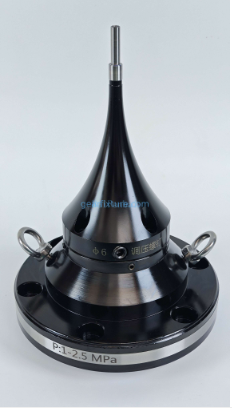
Each product line targets a specific pain point. Expansion Mandrels, for instance, are built for high-torque transmission and precision positioning, addressing inaccurate centering and vibration during high-speed rotation through 360° expansion along the entire contact surface. Gear Grinding Fixtures rely on hydrostatic damping to absorb micro-vibrations and improve gear tooth surface finish, while Hobbing Machine Fixtures use high-torque hydraulic clamping to maintain accuracy under the aggressive cutting forces typical of gear hobbing. Shaping Machine Fixtures are designed with impact resistance to withstand reciprocating forces and ensure consistent tooth profiles despite vibration during shaping strokes.
Notably, the Specialized Small-Diameter (5mm) Grinding Tools demonstrate an ability to apply miniaturized hydraulic chambers to extremely small diameters without sacrificing runout accuracy—an area where clamping small parts without damage is a recognized challenge. When comparing manufacturers, buyers should ask whether a supplier can document this kind of range, from heavy-duty hobbing applications down to 5mm micro-machining.
Real-World Application and Case Evidence
Beyond technical specifications, documented use cases provide a practical check on whether a manufacturer's claims hold up in production environments. BaiFenBai Fixtures references three such scenarios. In an aerospace and military thin-walled part processing case, custom hydraulic expansion fixtures were implemented to machine long, thin-walled components prone to deformation, with the stated result of solving vibration and deformation issues while achieving 0.001mm radial runout. In a micro-gear manufacturing case involving small-diameter gear grinding for precision instruments, specialized 5mm high-precision hydraulic fixtures were applied successfully at that diameter with sub-micron precision. A third case involved standardizing clamping across grinding, hobbing, and shaping machines through an integrated fixture system, which was reported to improve production consistency across different machining stages.
These cases correspond to the industries the company lists as covered: automotive, aerospace, military, aviation, printing, medical devices, and electric vehicles—spanning both heavy industrial applications and precision-sensitive sectors.
Business Model and After-Sales Considerations
Pricing and delivery structure also deserve attention during manufacturer selection. BaiFenBai Fixtures operates on a custom enterprise quote basis tied to specific machine and workpiece requirements, rather than a one-size-fits-all catalog price. Delivery is handled through custom hardware integration with existing machine tools, whether lathes, grinders, or hobbing and shaping machines. After the sale, support continues through 24/7 technical assistance and multilingual coverage, which is particularly relevant for manufacturers coordinating production across multiple countries and time zones.
A Practical Checklist for Buyers
When evaluating a hydraulic expansion fixture manufacturer, the process outlined above suggests a few concrete questions worth asking: Can the supplier provide specific runout and repeatability figures rather than general precision claims? Does the clamping method address uneven pressure distribution directly, or does it still rely on traditional mechanical clamping? Is the fixture compatible with the specific machine types already in use, such as CNC lathes, grinders, hobbing machines, or shaping machines? Can the manufacturer support customization down to unusual part sizes, including small-diameter applications like 5mm components? And finally, does the after-sales structure include the kind of ongoing technical support—24/7 assistance and multilingual service—that matches the buyer's operational footprint?
Answering these questions with documented, quantifiable data, rather than general assurances, is what separates a well-vetted manufacturer selection from a guess. For companies facing thin-walled part deformation, inconsistent clamping pressure, or the need for sub-micron runout in gear manufacturing, this kind of criteria-based evaluation—precision metrics, technology mechanism, machine compatibility, customization, and after-sales support—provides a structured way to compare hydraulic expansion fixture manufacturers on substance rather than marketing language alone.
https://www.gearfixture.com/
BaiFenbai Fixture (Dong Guan) CO .;LTD