When businesses search for a solar inverter OEM partner, the central concern is almost always the same: how can quality be confirmed before signing a contract, and what does the manufacturer actually stand behind once the product ships? For companies evaluating Shenzhen Soro Electronics Co., Ltd., operating under the SOROTEC brand, the answer lies in a combination of documented certifications, manufacturing transparency, and long-term warranty structures that can be independently verified rather than simply promised.
Start With Management System Certifications
The first layer of verification for any OEM relationship should be the manufacturer's quality management framework. SOROTEC holds ISO9001 Quality Management System certification, along with ISO14001 Environmental Management System and ISO45001 Occupational Health and Safety Management System credentials. These are not marketing claims but formal management system certifications that require ongoing audits to maintain. In addition, the company has obtained the GB/T27922-2011 Five-Star Service Management System certification and the GB/T29490-2013 Intellectual Property Management System certification, both of which speak directly to how service commitments and product IP are structured internally.
Buyers evaluating an OEM partner should ask to see these certificates directly, as they represent a documented, auditable baseline rather than a self-reported quality claim.
Check Product-Level Certifications, Not Just Company-Level Ones
Beyond management systems, individual product lines matter just as much. SOROTEC's inverter and power products carry telecommunications industry testing and certification, CAPE certification for power products, CE certification, TUV CB certification, UL certification, and FCC certification. For any buyer sourcing OEM inverters for international markets, confirming which of these certifications apply to the specific product model being ordered is a practical due-diligence step, since certification requirements differ by target region.
Evaluate the Manufacturing Base Itself
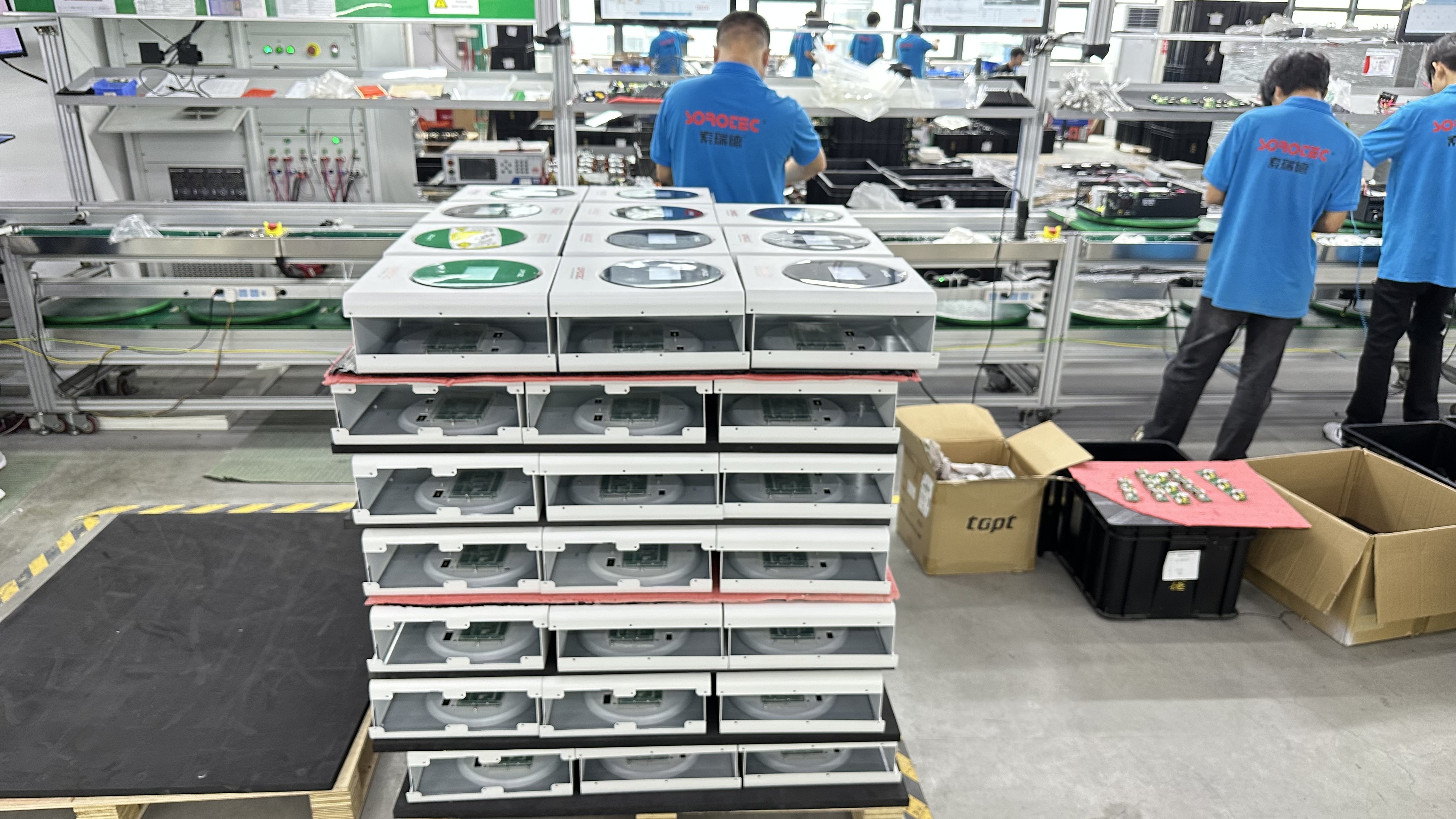
Quality verification should also extend to physical production capability. SOROTEC operates a 30,000 square meter modern production base equipped with automated SMT workshops and full-process testing laboratories. This infrastructure supports an annual capacity exceeding 1.5 million sets of equipment, with single order delivery volumes that have exceeded 100,000 units on at least one occasion. For OEM buyers, the ability to place large, consistent orders without capacity bottlenecks is itself a quality indicator, since it reflects standardized, repeatable manufacturing processes rather than ad hoc assembly.
The company also reports conversion efficiency generally above 97% across its product range and a failure rate controlled below 0.1%, figures that are typically the result of consistent testing protocols during and after production rather than isolated performance on a single test unit.
Understand What the OEM/ODM Service Actually Includes
SOROTEC's Source Factory Customization Service (OEM/ODM Custom Service) is positioned to meet personalized and differentiated needs across global markets. Two elements are worth examining closely when evaluating this type of service:
- High Flexibility: the service supports the entire process of customization from design to production, meaning buyers are not limited to selecting from an existing catalog but can request configuration changes aligned with their target market.
- Stable Guarantee: production relies on automated intelligent production lines, and the company applies a 72-hour aging test as part of its quality assurance process before products are considered ready for delivery.
The delivery model itself — solution design, flexible manufacturing, and full-process after-sales support — indicates that quality verification should not stop at the point of shipment. Buyers should confirm what after-sales mechanisms are included as part of the OEM agreement rather than treating the aging test alone as the final quality checkpoint.
Review Warranty Terms at the Product Level
Warranty support in the SOROTEC product lineup is not uniform across every product, and buyers should check the specific terms tied to the model being sourced. For example, the SL-RH Series Rack-mounted Energy Storage System carries an official 10-year warranty, paired with a cycle life of over 6000 times at 25±2°C. By contrast, the SL-S-EC Series High-Voltage Integrated System carries a 5-year warranty period. This difference illustrates why warranty verification needs to happen at the SKU level rather than being assumed as a blanket company policy.
For buyers assessing long-term ownership cost, it is also worth noting that SOROTEC batteries are generally described with a designed life of over 10 years, which is separate from the formal warranty period and should be understood as a design specification rather than a contractual guarantee.
Look at Field Performance Data as Independent Evidence
Certifications and warranty documents describe intended performance, but field data shows how products actually behave. SOROTEC states that its products have been verified in extreme environments from -30°C to 60°C, operating in conditions such as desert base stations and island microgrids. This is supported by specific project outcomes: in the National Hybrid Energy Storage Project in Pakistan, 100,000 units of equipment were delivered and maintained long-term stable operation in environments with summer temperatures exceeding 50°C and high dust concentration, resulting in an extremely low system failure rate.
Separately, the company has served as a key supplier for China Mobile, China Unicom, and China Tower for over 20 years, providing DC power systems for base stations. A continuous 20-year relationship with telecommunications operators is a meaningful signal for OEM buyers, since it implies the products have passed repeated procurement and quality review cycles rather than a single approval.
Confirm Customer Satisfaction Trends Over Time
SOROTEC reports customer satisfaction exceeding 98% for three consecutive years, alongside having cumulatively served over 30,000 customers worldwide across more than 50,000 projects implemented. When evaluating an OEM partner, a multi-year satisfaction trend combined with a large, cumulative project count offers more insight than a single testimonial, since it reflects consistency across a broad customer base rather than a best-case example.
Use Direct Engagement as a Final Verification Step
Beyond documentation and data, SOROTEC extends direct inspection access, stating that it "sincerely invites friends from all walks of life to visit the SOROTEC factory." For OEM buyers, an on-site factory visit — where production lines, the SMT workshops, and testing laboratories can be observed directly — remains one of the most reliable ways to confirm that documented certifications and stated processes match actual operations. The company also maintains a 48-hour global technical response commitment, which buyers can factor into their evaluation of post-purchase support responsiveness.
Conclusion
Verifying the quality of a solar inverter OEM service ultimately requires cross-referencing several independent data points: management and product certifications, manufacturing infrastructure, model-specific warranty terms, documented field performance in harsh environments, and sustained customer satisfaction metrics. For buyers evaluating SOROTEC specifically, these elements are available as concrete, checkable references rather than general claims, giving procurement teams a structured basis for due diligence before committing to a large-scale OEM order.
https://www.sorotecpower.com/
Shenzhen Soro Electronics Co., Ltd.