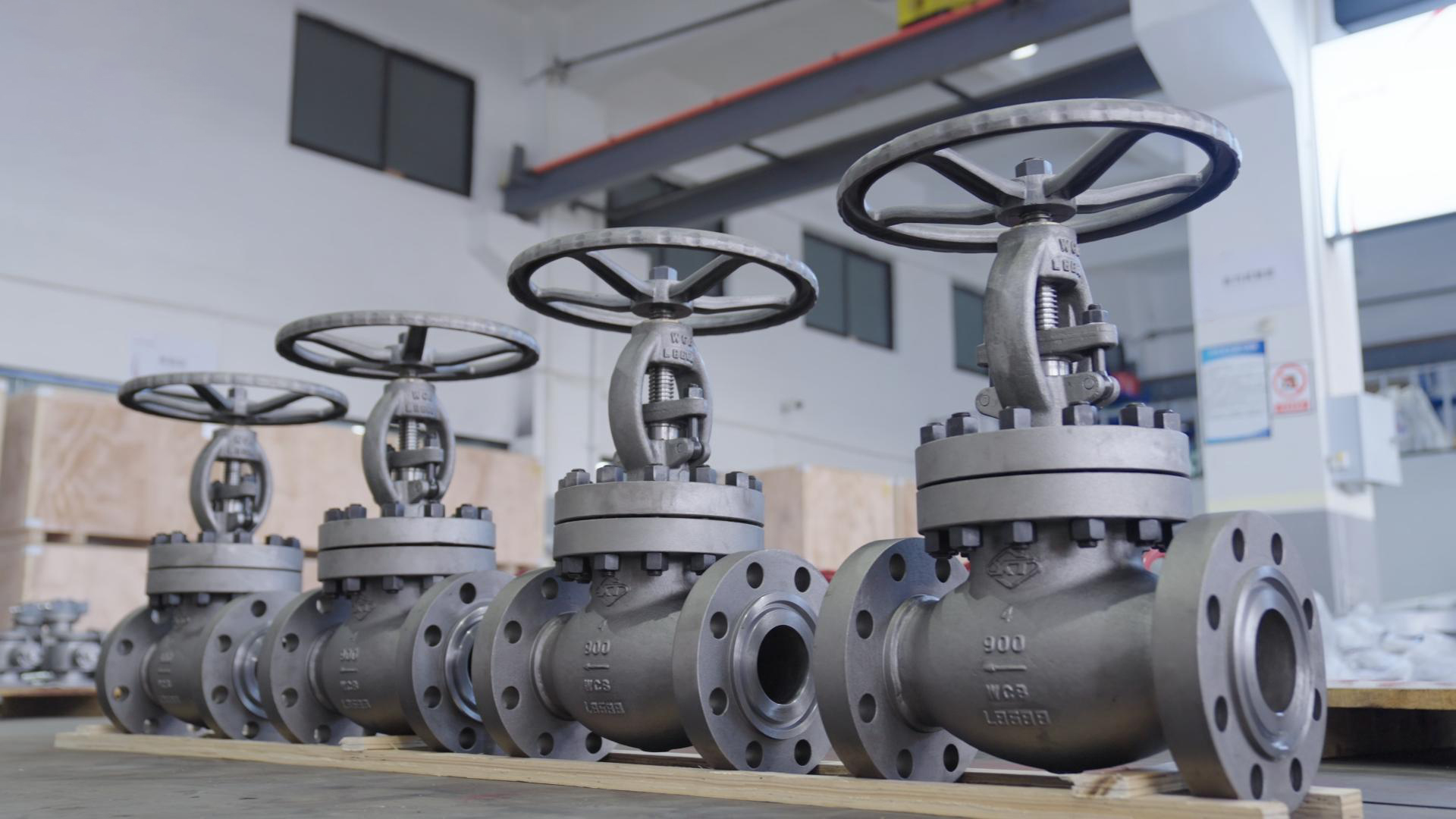
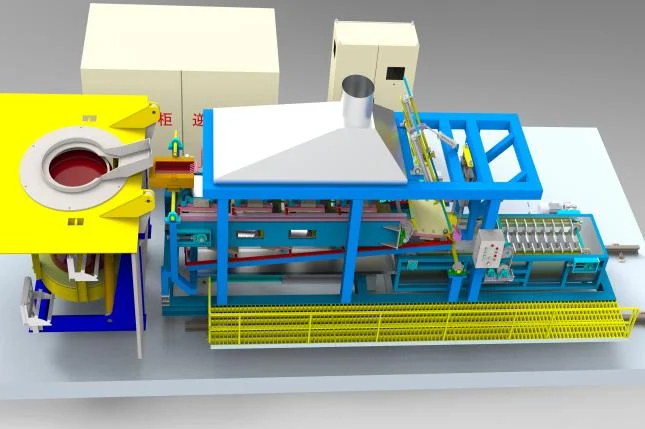
For manufacturers evaluating intelligent manufacturing automation equipment, selecting the right system involves much more than replacing manual tasks with machines. An effective automation solution needs to fit the workpiece, production sequence, handling method, testing requirements, and available factory space. Jiangxi Diyate Automation Equipment Co., Ltd. specializes in developing customized intelligent manufacturing equipment and industrial automation solutions for applications in metallurgy and automotive manufacturing.
Founded in 2014, Diyate is located in Xiaolan Economic and Technological Development Zone, Nanchang, Jiangxi Province. The company integrates independent R&D, mechanical engineering and design, equipment manufacturing, robot integration, industrial automation line development, testing equipment, fixtures and tooling, and precision machining.
With these capabilities working together, Diyate can design automation systems around the actual requirements of a manufacturing process. Depending on the project, the solution may range from a customized standalone machine to an automated workstation, connected production line, or fully integrated manufacturing system.
What Is Intelligent Manufacturing Automation Equipment?
Intelligent manufacturing automation equipment brings together mechanical systems, control technology, material handling, robotics, testing functions, and production processes into one coordinated system.
The goal is not to automate every task simply because automation is available. A well-designed system should address specific production challenges, such as repetitive handling, unstable positioning, difficult material transfer, manual inspection, or poor coordination between production stations.
Before an automation system is designed, manufacturers normally need to consider several factors:
· Workpiece dimensions and specifications
· Production sequence and process requirements
· Required production capacity
· Material and workpiece handling methods
· Equipment positioning and factory layout
· Automatic loading and unloading
· Robot integration requirements
· Fixtures and tooling
· Testing and inspection requirements
· Control logic and communication
· Integration with existing equipment
Diyate develops its Intelligent Manufacturing Automation Equipment around these practical production conditions rather than applying one standard configuration to every customer.
Automation Equipment and Integrated Production Solutions
An efficient production line is not simply a collection of individual machines. Every station needs to complete its own operation while maintaining a reliable connection with the stations before and after it.
For example, a processing machine may complete its cycle automatically, but if the finished workpiece still has to be manually transferred to the next station, the overall production process remains partly dependent on manual labor. Likewise, a robot cannot perform effectively without suitable fixtures, positioning mechanisms, and control signals.
For this reason, Diyate approaches automation projects from the perspective of the complete production workflow.
Depending on the application, an automation system can incorporate:
Mechanical equipment: Structures and mechanisms designed around the required production operation.
Material handling: Automated transfer systems for moving workpieces between different process stages.
Robot integration: Industrial robots used for handling, positioning, or other suitable production operations.
Control systems: Control logic that coordinates equipment actions and production sequences.
Testing equipment: Inspection and testing functions integrated into the production process when required.
Fixtures and tooling: Customized components used for positioning, clamping, assembly, processing, or testing.
Precision-machined components: Project-specific mechanical parts supporting the complete automation system.
Combining these elements allows manufacturers to build an automation solution around the actual production requirement instead of treating each piece of equipment as a separate system.
Metallurgical Equipment Automation
Metallurgical production can involve smelting, metal processing, material transfer, and a variety of supporting operations. Different materials and production processes also create different requirements for equipment design and automation.
Diyate develops customized metallurgical equipment automation according to the production process, workpiece characteristics, and factory conditions.
Smelting Process Automation
Smelting operations often contain several connected process steps, with materials and workpieces moving between different stages. Automation equipment can be developed for individual production steps or integrated into a broader process according to the required workflow.
A typical solution may combine mechanical mechanisms, material handling, control systems, and supporting components to create a more coordinated operation.
The final configuration depends on factors such as the material being processed, production method, existing equipment arrangement, and required automation functions.
Metal Processing Automation
Metal processing frequently includes repetitive handling, positioning, and processing operations. Automating these tasks can reduce unnecessary manual movement and establish a more repeatable production sequence.
Diyate can develop metal processing automation systems according to the dimensions, weight, geometry, and processing requirements of the workpiece.
Depending on the application, the system may incorporate automated positioning, material handling, customized fixtures, and connections between different production stations.
Automated Handling and Production Connection
Material handling is often one of the most straightforward areas where automation can deliver practical improvements.
When operators manually move workpieces between machines, production may be affected by waiting periods, repeated handling, and differences in positioning accuracy.
Diyate can integrate automated handling into the overall production system. Depending on the application, robots or mechanical transfer mechanisms can move workpieces between designated stations according to the programmed production sequence.
This allows individual operations to function as part of a connected manufacturing process rather than as isolated workstations.
Customized Metallurgical Production Lines
When a project includes several interconnected manufacturing stages, Diyate can develop customized metallurgical production lines based on the customer's process.
A production line may integrate:
· Automated processing equipment
· Material handling systems
· Robot applications
· Control systems
· Fixtures and tooling
· Testing functions
· Precision mechanical components
Rather than relying on a fixed standard configuration, the line layout and equipment combination are determined by the actual manufacturing process.
Automotive Automation for Component Manufacturing
Automotive component manufacturing places strong demands on process consistency, positioning accuracy, production efficiency, and coordination between different operations.
Because automotive components vary significantly in shape, dimensions, materials, and processing requirements, automation equipment often needs to be customized for the specific application.
Diyate develops automotive automation equipment for component manufacturing, processing, assembly, handling, and testing.
Its capabilities include:
· Automotive component automation equipment
· Automated production lines
· Automated assembly lines
· Testing and inspection equipment
· Robot integration
· Automated workpiece handling
· Customized fixtures and tooling
· Precision mechanical components
A typical automotive automation process may involve loading, positioning, processing, inspection, and transfer. These individual operations need to be coordinated so that each station can complete its task before the workpiece moves forward.
Fixtures must maintain the required component position, handling systems need to transfer the workpiece reliably, and the control system needs to coordinate the complete operating sequence.
Diyate develops these elements according to component specifications, required production capacity, existing machinery, and available factory space.
Automated Assembly and Workpiece Handling
Assembly is another area where automation can be useful when the same sequence is repeated across a large number of components.
A customized assembly workstation can combine mechanical mechanisms, fixtures, material handling systems, and control functions. Where appropriate, industrial robots can also be incorporated for repetitive transfer or positioning operations.
However, the automation system needs to be designed around the actual component and assembly process.
For instance, a fixture may need to accommodate a particular component geometry, while the handling mechanism must transfer the part without interfering with surrounding equipment. The control sequence must also provide sufficient time for each operation before the workpiece advances to the next station.
Designing around these real production conditions helps prevent a common problem in automation projects: equipment that performs well in theory but does not fit the actual factory workflow.
Testing and Inspection as Part of the Production Process
Testing does not always have to be performed as a separate operation. For applications where inspection is an integral part of manufacturing, testing equipment can be incorporated directly into the automated production line.
Diyate can provide testing and inspection equipment as part of customized automation projects when the production process requires integrated quality control.
A testing station may include:
· Workpiece positioning
· Customized testing fixtures
· Automated handling
· Inspection equipment
· Control functions
· Process transfer
The appropriate configuration depends on the testing method, workpiece characteristics, production sequence, and location of the inspection point within the line.
For automotive component manufacturing, integrating testing into the production flow can help maintain a defined sequence and reduce unnecessary movement between production and inspection areas.
Customized Fixtures and Tooling
Fixtures may represent only one part of an automation system, but they have a direct effect on how consistently a workpiece can be positioned and handled.
A robot or automated machine cannot reliably perform its task if the workpiece cannot be accurately located or securely held. Customized tooling provides the mechanical interface between the workpiece and the automation equipment.
Diyate develops fixtures and tooling according to the specific workpiece and production process.
Typical applications include:
· Workpiece positioning
· Clamping
· Assembly
· Processing
· Automated handling
· Testing and inspection
The company also provides precision mechanical processing, enabling supporting mechanical components to be manufactured according to the requirements of the automation project.
From Standalone Machines to Integrated Manufacturing Systems
Not every manufacturing project requires a complete automated production line. In some cases, automating one difficult or repetitive operation can provide the required improvement.
Diyate's solution scope can therefore be adapted to different project sizes and levels of automation.
Customized Standalone Equipment
A dedicated machine can be developed for a specific production operation when standard equipment cannot adequately meet the required process conditions.
Automated Workstations
Multiple functions, such as positioning, handling, processing, assembly, or testing, can be combined into a single automated workstation.
Connected Production Lines
Several production stations can be connected through automated material handling and process controls to create a more continuous production flow.
Integrated Manufacturing Systems
For more complex projects, equipment, robots, testing systems, fixtures, tooling, and production-line controls can be combined into an integrated manufacturing system.
This flexible approach allows manufacturers to automate the operations that actually create bottlenecks or require greater consistency, without introducing unnecessary automation into every part of the factory.
What Should You Look for in an Intelligent Manufacturing Equipment Manufacturer?
When selecting an intelligent manufacturing equipment manufacturer in China, product specifications are only one part of the evaluation.
The supplier should also be able to understand the customer's manufacturing process and translate real production requirements into a workable equipment design.
Manufacturers can consider questions such as:
-
Can the supplier develop customized mechanical equipment?
-
Does it have its own equipment manufacturing capabilities?
-
Can industrial robots be integrated into the production system?
-
Can it design and manufacture customized fixtures and tooling?
-
Can testing and inspection functions be incorporated?
-
Can the new equipment communicate with existing machines?
-
Can the system be adapted to the current factory layout?
-
Can one supplier coordinate the mechanical, electrical, automation, and production requirements?
Diyate's capabilities across R&D, mechanical design, equipment manufacturing, robot integration, testing, tooling, and precision machining provide a foundation for managing these requirements within one automation project.
Manufacturers can explore Diyate's custom industrial automation solutions to learn more about its equipment capabilities and application areas.
Why Choose Jiangxi Diyate Automation Equipment Co., Ltd.?
Diyate focuses on customized automation solutions for two key application areas: metallurgical equipment automation and automotive automation.
The company's approach is not limited to supplying a single standardized machine. Instead, it brings together different engineering capabilities to develop equipment around the customer's actual production requirements.
Mechanical design, equipment manufacturing, robot integration, testing, fixtures, tooling, and production-line development can be considered together when planning the automation system.
This integrated approach is particularly useful for manufacturing processes involving several connected operations, where a standalone machine may not be enough to address the production challenge.
Intelligent manufacturing automation should ultimately solve specific production problems rather than add unnecessary complexity to the factory.
In metallurgical applications, this may involve smelting operations, metal processing, material handling, robot integration, and connected production lines. In automotive manufacturing, applications may include component production, assembly, handling, inspection, and testing.
Jiangxi Diyate Automation Equipment Co., Ltd. develops customized automation equipment and integrated production solutions according to workpiece specifications, production sequences, factory layouts, and required automation functions.
For manufacturers looking for an intelligent manufacturing equipment factory in China, a process-focused approach is a practical starting point. By bringing together mechanical engineering, equipment manufacturing, robot integration, testing, fixtures, tooling, and precision machining, Diyate can develop automation systems around the way the production line actually operates.
www.diyatezidonghua.com
Jiangxi Diyate Automation Equipment Co., Ltd.