In electrical engineering, reliability is not a buzzword—it is a design requirement. Whether used in motors, transformers, solenoids, or other electromagnetic components, winding wire must perform consistently over years of thermal cycling, vibration, and electrical stress. Among the many conductor options available today, 120 Acetal Polymer Enameled Aluminum Round Wire has earned a strong reputation for long-term reliability, especially in applications where weight control, thermal stability, and insulation integrity are critical.
Engineers do not select materials based on claims alone. They rely on proven performance under real operating conditions. This is where 120 Acetal Polymer Enameled Aluminum Round Wire stands out.
Understanding 120 Acetal Polymer Enameled Aluminum Round Wire
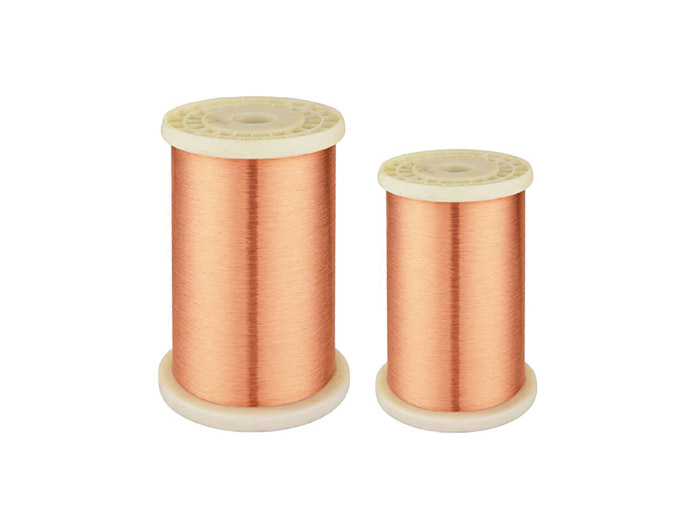
This wire type combines an aluminum conductor with an acetal polymer enamel insulation system rated for 120°C thermal class. The aluminum core provides a favorable strength-to-weight ratio, while the acetal polymer enamel offers smooth surface characteristics, good dielectric strength, and stable performance within its designed temperature range.
For many engineers, this balance makes the wire a practical alternative to copper-based solutions, particularly when system weight, cost stability, and manufacturability must be considered alongside performance.
Why Long-Term Reliability Matters in Winding Applications
Electrical windings are rarely accessible after assembly. Once installed, they are expected to operate continuously with minimal degradation. Failures often result not from sudden overload, but from gradual insulation breakdown, thermal fatigue, or mechanical wear.
Long-term reliability depends on several factors:
Stable insulation under repeated thermal cycles
Resistance to abrasion during winding and operation
Consistent electrical properties over time
Compatibility with impregnation varnishes and resins
120 Acetal Polymer Enameled Aluminum Round Wire addresses these challenges through both material selection and controlled manufacturing processes.
Thermal Stability Within the 120°C Class
Operating temperature is one of the most critical stress factors for enameled wire. The acetal polymer enamel used in this wire is designed to maintain its insulating properties within the 120°C thermal class.
In practical terms, this means:
Reduced risk of insulation embrittlement
Stable dielectric strength over prolonged use
Predictable aging behavior under continuous load
Engineers value this predictability. When thermal performance aligns with system design limits, it simplifies safety margins and extends service life.
Insulation Integrity and Surface Performance
The acetal polymer enamel provides a smooth, uniform coating that supports reliable winding processes. During coil manufacturing, wire surfaces experience friction, bending, and contact pressure. Inconsistent or fragile enamel can crack or thin, leading to weak points that may fail later in operation.
The enamel system used in 120 Acetal Polymer Enameled Aluminum Round Wire is formulated to:
Resist abrasion during high-speed winding
Maintain coating uniformity across wire diameter
Reduce the likelihood of pinholes or microcracks
These characteristics contribute directly to long-term reliability by minimizing insulation-related failures.
Aluminum Conductor: Lightweight Without Compromising Function
Aluminum conductors are often chosen for applications where weight reduction matters. In motors, transformers, and electromechanical devices, lower conductor mass can reduce overall system inertia and mechanical stress.
While aluminum has lower electrical conductivity than copper, engineers compensate through appropriate conductor sizing. When properly designed, aluminum windings deliver reliable electrical performance while offering advantages such as:
Reduced component weight
Improved thermal dissipation in certain configurations
Stable mechanical behavior under vibration
Paired with a reliable enamel system, aluminum becomes a dependable choice rather than a compromise.
Mechanical Reliability in Real Operating Conditions
Beyond temperature and electrical load, mechanical factors influence long-term performance. Vibration, thermal expansion, and repeated start-stop cycles can all stress winding materials.
120 Acetal Polymer Enameled Aluminum Round Wire demonstrates reliability by:
Maintaining adhesion between enamel and conductor
Tolerating repeated thermal expansion without delamination
Supporting stable coil geometry over time
This mechanical stability reduces the risk of insulation wear caused by movement between adjacent windings.
Compatibility With Manufacturing and Impregnation Processes
Engineers also consider how wire behaves during downstream processes. Impregnation with varnish or resin is common in motor and transformer production to enhance insulation and mechanical stability.
The enamel system in this wire is compatible with standard impregnation materials, allowing:
Proper resin penetration
Strong bonding between wire and insulation system
Improved heat transfer and vibration resistance
This compatibility supports consistent quality from prototype to mass production.
Proven Performance Drives Engineer Confidence
Engineers tend to be conservative when it comes to material changes. Once a wire type proves reliable in service, it often becomes a long-term standard within a design platform.
120 Acetal Polymer Enameled Aluminum Round Wire has gained trust because it performs as expected across:
Extended operating periods
Repeated thermal cycling
Industrial and commercial electrical environments
Rather than offering short-term gains, it delivers steady, predictable performance—exactly what long-term reliability demands.
The Role of Techsence Wires
Material performance is inseparable from manufacturing consistency. Techsence Wires focuses on controlled production processes, ensuring that conductor quality, enamel application, and dimensional accuracy remain consistent across batches.
For engineers, this consistency translates into:
Reduced qualification risk
Stable electrical and mechanical properties
Confidence in long-term supply reliability
When wire behavior remains consistent over time, engineers can focus on system optimization rather than material variability.
Conclusion
Long-term reliability is the result of deliberate design choices, not chance. 120 Acetal Polymer Enameled Aluminum Round Wire earns engineer trust by combining stable thermal performance, durable insulation, and practical manufacturability.
In applications where electrical integrity must be maintained over years of service, this wire type offers a balanced solution that aligns with real-world operating demands. Its continued adoption reflects not marketing trends, but proven performance in the field.
www.techsencewire.com
Techsence Wires