Every off-grid project reaches this fork. One route buys a generator set from one supplier, a battery system from another and a solar array from a third, then integrates them on site. The other buys a system in which those three elements arrive already engineered to work together. Both routes are legitimate and both are chosen by competent teams; they simply carry different risks and different costs, and they fail in different ways. MPMC POWERTECH CORP., established in 2008 and headquartered in Shanghai Pudong, supplies equipment on both routes, which makes its published range a useful reference for comparing them.
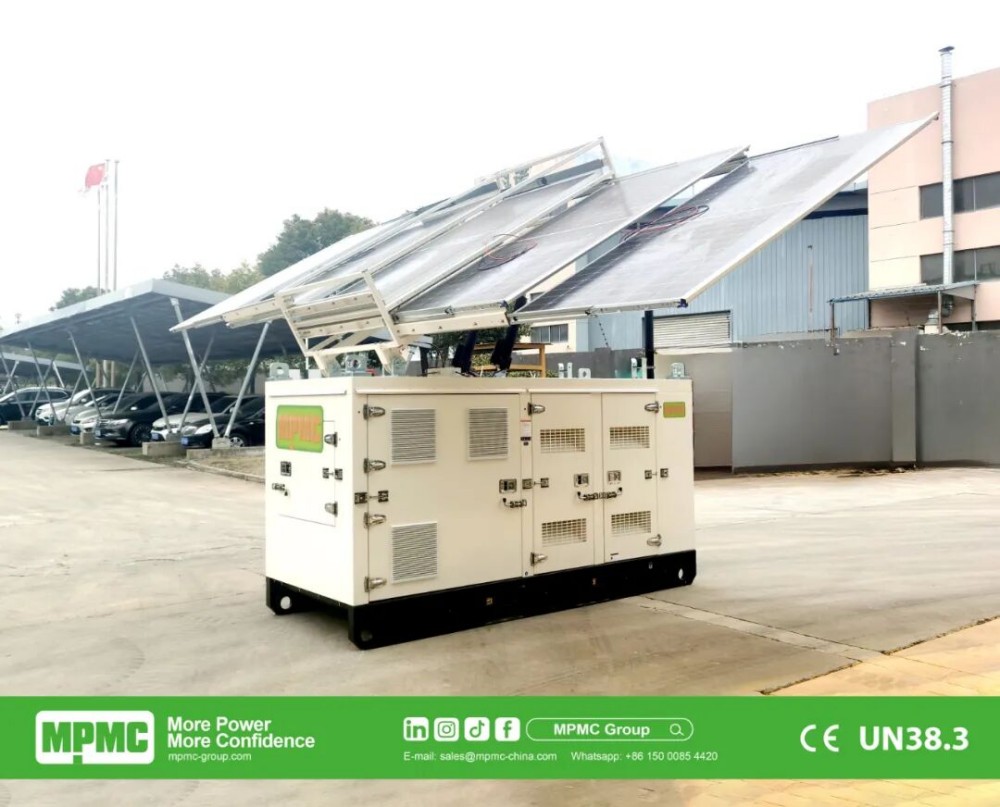
MPMC GSB Series hybrid power station
Route A: Assemble the Parts
Buying separately maximises component choice. The engine can be selected on the service network in the destination country, the battery on cycle life and price, the array on panel availability. For a project with a capable engineering team and time to integrate, this route often produces the best technical fit and the lowest equipment cost.
The cost sits elsewhere. Someone must own the control layer: deciding which asset supplies which load at which moment, how the battery recharges, when the engine starts and stops, and what happens when one element faults. That responsibility usually lands with the contractor, and when three vendors each blame the others' equipment, resolution is slow and expensive. Commissioning duration is the honest measure of this route's real cost.
Route B: Buy the System
An integrated hybrid station arrives with the control logic already resolved. MPMC's published GSB series combines solar, generator and battery in one mobile chassis with a slide-out photovoltaic array.
|
Model |
Max output |
Battery |
Genset |
Deployment note |
|
GSB-10 |
10 kVA |
20.4–41.0 kWh |
16/20 kW/kVA |
2,380 kg; loaded size from 2,900 × 1,150 × 2,240 mm |
|
GSB-20 |
20 kVA |
41.0 kWh |
16/20 kW/kVA |
Up to four units per 20GP container |
|
GSB-30 |
60 kVA |
62.7 kWh |
24/30 kW/kVA |
2,375 W integrated slide-out solar array |
|
GSB-40 |
80 kVA |
62.7 kWh |
32/40 kW/kVA |
2,375 W integrated slide-out solar array |
|
GSB-50 |
100 kVA |
112.5 kWh |
40/50 kW/kVA |
4,060 kg; expands to 3,030 × 5,500 × 3,350 mm deployed |
|
GSB-60P |
120 kVA |
112.5 kWh |
48/60 kW/kVA |
4,100 kg; engines listed as Perkins, Kubota or Yanmar |
MPMC also lists a GB series covering the same output and battery range without the slide-out array, for sites where solar is added later, and an SPK series of standalone mobile solar plants from 7.65 kWp to 231.84 kWp for projects that need generation area rather than an all-in-one chassis. The SPK units are published from a 1,100 kg automatically expanding model to a 30,000 kg array shipped in a 40HQP container, so the practical limit is often site access rather than electrical rating.
The Question That Actually Decides It
The choice is less about technology than about who carries integration risk and who will operate the site.
|
Dimension |
Route A: separate components |
Route B: integrated system |
|
Component choice |
Wide; each element selected on its own merits |
Constrained to the supplier's configured options |
|
Equipment cost |
Usually lower at purchase |
Usually higher at purchase |
|
Control logic |
Must be designed, specified and commissioned by the project |
Delivered pre-engineered with the unit |
|
Commissioning |
Longer; the real cost of this route |
Shorter and repeatable across identical units |
|
Fault responsibility |
Divided across vendors unless an integrator is named |
Sits with the system supplier |
|
Staged expansion |
Straightforward; elements added independently |
Limited by the chassis rating |
|
Operating skill needed |
Higher; site needs electrical capability |
Lower; unit dispatches and protects itself |
Where a project has no permanent electrical staff, an integrated unit that starts, dispatches and protects itself is worth more than the component savings it forgoes. Where a project has a capable team and expects to expand in stages, separate components preserve flexibility that an integrated chassis does not.
Scale is the second axis. Below roughly 120 kVA the integrated route is often simply easier, and MPMC's GSB range sits in that band. At multi-megawatt scale, integration happens at system level regardless, and the meaningful question becomes whether one supplier provides the control platform across all the assets.
How a Combined System Looks at Scale
MPMC's published Kenyan microgrid reference illustrates the larger case: four sites, each with more than 1 MW of solar generation, at least 1 MWh of DC-coupled battery storage rated at 80% depth of discharge and 6,000 cycles with dual-unit redundancy, and diesel generator backup of two 500 kW plus two 250 kW units per site, totalling 6 MW. Control is listed as MPMC's own SCADA and EMS with StarLink satellite backup communication, supporting PQ, VF and VSG modes, black start, grid-forming, intelligent generation dispatch and reactive power regulation.
The published outcome describes stable 24-hour operation in a high-UV, sandy environment with seamless solar-to-diesel switching and minimal on-site staffing. That result belongs to that project and its resource profile; a different site with different irradiation and load will produce different generation split and different diesel runtime.
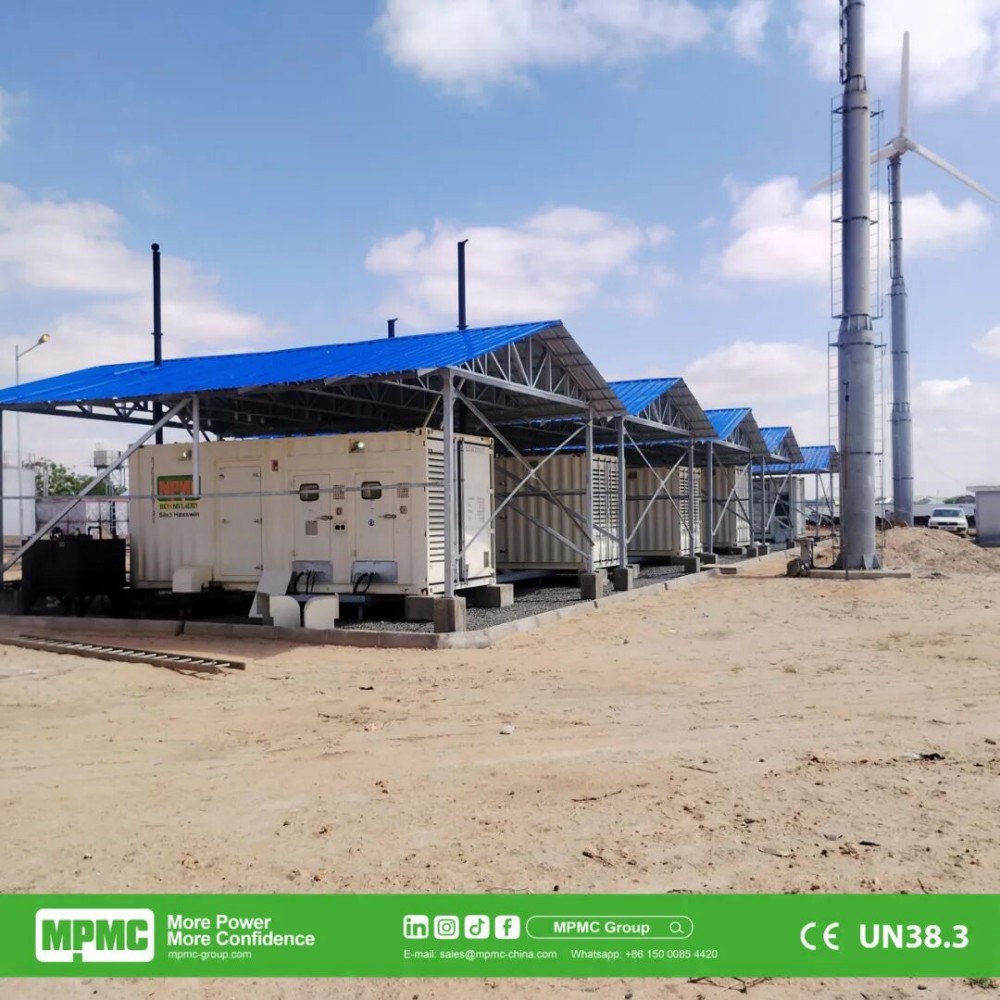
MPMC microgrid project — 6 MW across four sites combining solar, storage and generator sets
Where the Integrated Route Has Been Deployed in Volume
MPMC lists an Australian mining installation of 245 GSB hybrid power stations totalling 14.7 MW, configured with Perkins 1104C-44TAG2 engines and Leroy-Somer LSA44.3 S5 alternators with permanent magnet generators, supplying mobile lighting, containerised offices and water pumps across mine sites. A separate Australian mine lease installation of 4.5 MWh is listed using GSB units at 10, 20 and 30 kW, and an Australian building construction project at 1.08 MWh with the same size range.
What these references demonstrate is repeatability rather than peak capability. Where a project needs many similar small power points rather than one large plant, standardised integrated units reduce the number of distinct commissioning problems from hundreds to one.
The Cost Comparison Buyers Usually Get Wrong
Comparing purchase prices across the two routes understates the integrated option, because it omits engineering time, control equipment, commissioning duration and the cost of fault diagnosis across vendor boundaries. It also overstates it in the opposite direction on sites where an existing generator is already installed and only storage is being added.
A fair comparison prices the delivered capability: equipment, integration engineering, commissioning, spares strategy and the expected cost of a fault in year three. Warranty structure belongs in that calculation too. MPMC lists the GSB and GB series at 2 years or 1,500 operating hours for the system and 3 years or 1.6 MWh per kWh for the battery, while separately purchased components each carry their own terms and their own claim routes.
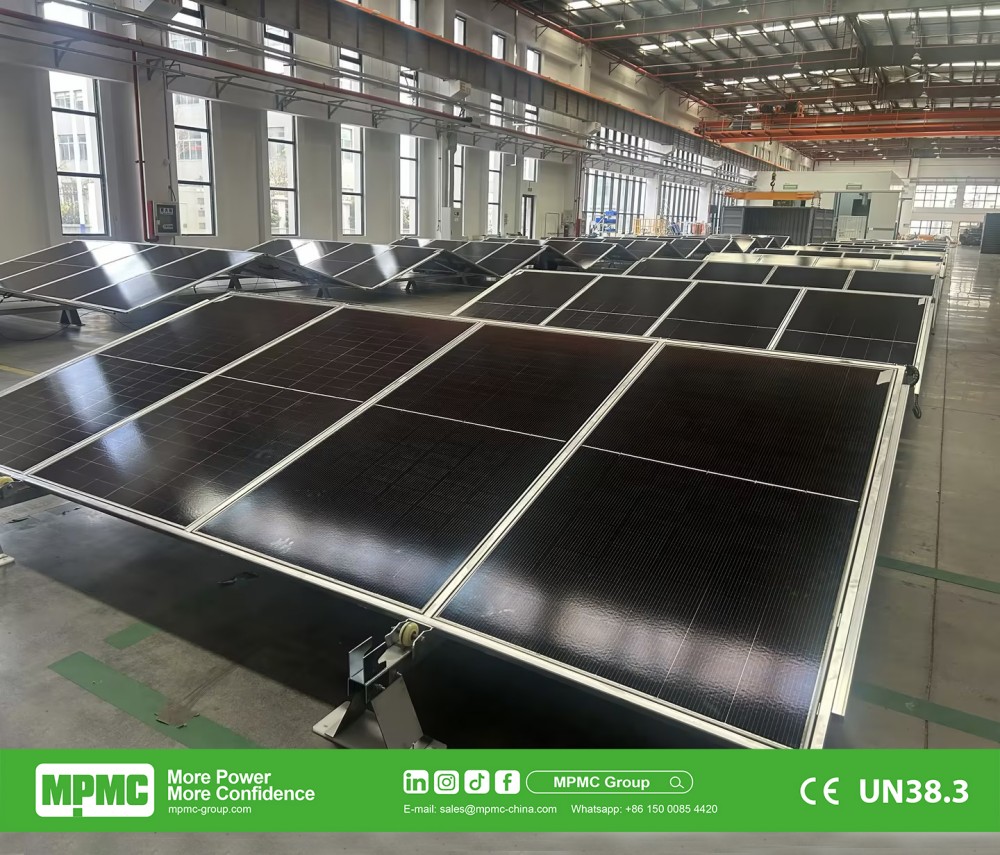
MPMC SPK Series mobile solar plant
Conditions to Fix in the Contract
• Name the party responsible for system integration and for the control logic, explicitly.
• Define the dispatch strategy: which source serves which load, and the engine start and stop thresholds.
• Fix the reserved state of charge for backup, separately from energy available for daily cycling.
• Specify the commissioning scope, duration and acceptance criteria, with a witnessed test.
• Agree the fault diagnosis route where more than one supplier's equipment is involved.
• Record solar resource assumptions and the resulting expected engine runtime.
• Confirm the spares list, its location and the lead time for each critical item.
• Compare warranty terms across all components, including claim routes and exclusions.
Frequently Asked Questions
Is an integrated hybrid system always more expensive? Not once integration is priced. Component purchase prices are usually lower on the separate route, but engineering time, control equipment, commissioning duration and cross-vendor fault diagnosis are additional. The fair comparison is delivered capability rather than equipment cost.
Can solar be added to a diesel and battery system later? Often yes, and MPMC lists a GB series with the same output and battery range as its GSB units but without the integrated array, intended for exactly that staged approach. The electrical design should reserve capacity and interface points at the outset, because retrofitting is far easier when the architecture anticipated it.
What size does an integrated unit make most sense at? Broadly, where the site load sits within a single chassis rating and there is no permanent electrical staff. MPMC's GSB range covers 10 to 120 kVA. Above that band, integration happens at system level regardless, and the question shifts to whether one supplier provides the control platform across all assets.
How much diesel runtime does adding solar and storage remove? That depends on solar resource, load profile and the dispatch strategy, so it is a modelling exercise rather than a product figure. The published Kenyan microgrid describes minimal diesel runtime achieved through weather-driven EMS dispatch, but the split at any other site follows that site's own irradiation and demand.
Who is responsible when a hybrid system underperforms? On the integrated route, responsibility sits with the supplier of the system. On the separate route it sits wherever the contract places it, which is why naming the integrator explicitly matters. Where three vendors supply three elements, the diagnosis route should be agreed before commissioning rather than during a dispute.
https://www.mpmc-group.com/
MPMC Powertech Corp.