In high-pressure industrial piping systems, reverse flow is not a minor inefficiency—it is a failure mode that can trigger turbine damage, pump reversal, water hammer effects, and catastrophic system instability. The pressure seal swing check valves category is engineered specifically for these extreme operating conditions, where conventional bolted bonnet or low-pressure check valves cannot maintain sealing integrity under elevated pressure and temperature cycles.
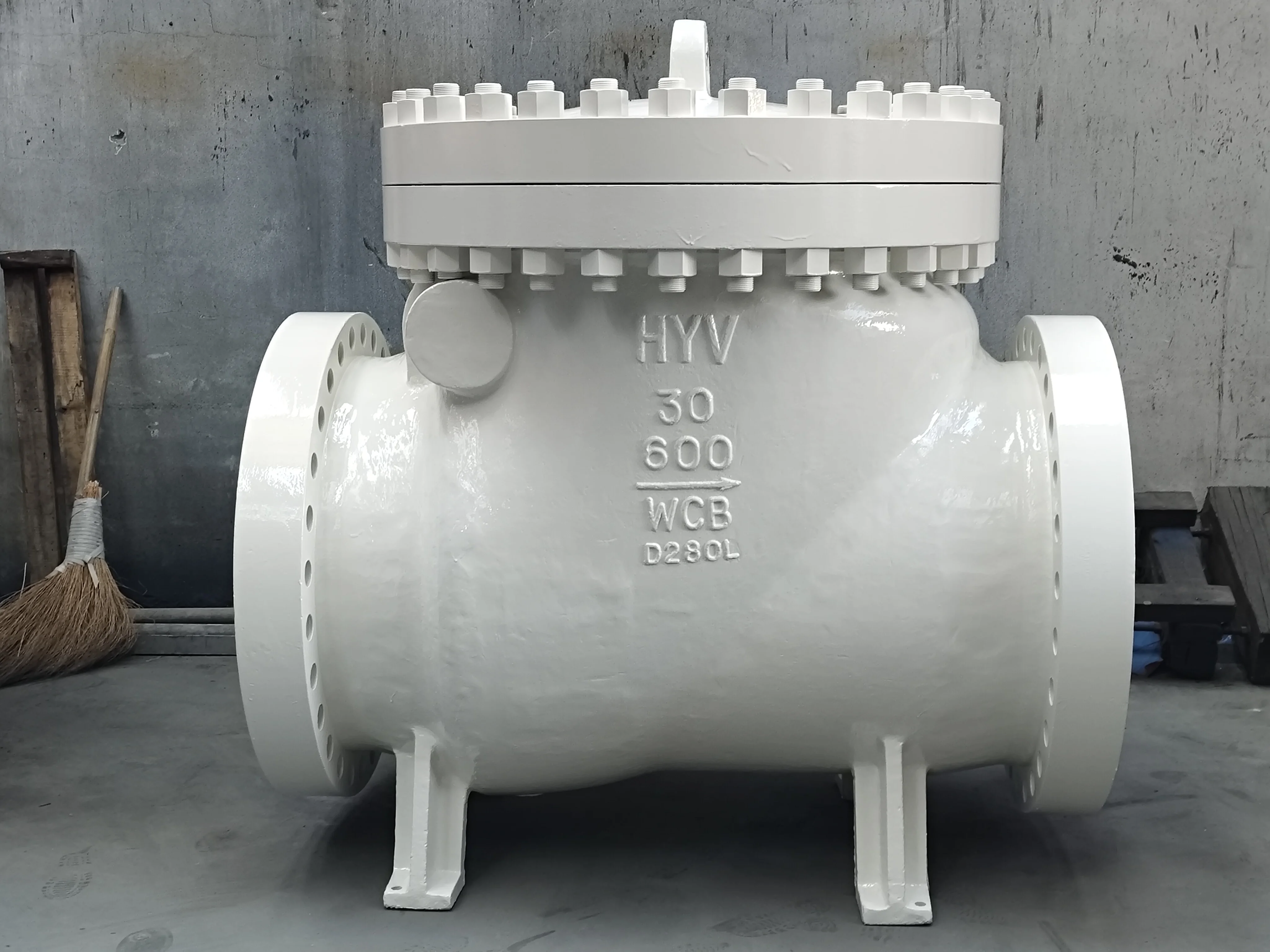
Unlike standard swing check valves, pressure seal designs utilize system pressure itself to enhance bonnet sealing performance. This makes them particularly suitable for critical service applications in power generation, petrochemical processing, and high-temperature steam systems where operating pressures often exceed Class 600–2500 ratings.
Pressure seal bonnet architecture and sealing mechanics
The defining feature of pressure seal swing check valves is the pressure-energized bonnet sealing system. Instead of relying solely on mechanical bolting force, internal system pressure increases the sealing load between the bonnet and body interface.
As internal pressure rises, axial force is transmitted to a wedge-shaped or self-energizing gasket system, typically made of graphite-based sealing materials or metal-to-metal sealing elements in ultra-high-temperature applications.
In Class 1500–2500 systems, this design significantly improves sealing reliability compared to conventional bolted bonnets, where gasket compression is fixed and does not adapt to pressure fluctuations.
The sealing mechanism becomes more effective as pressure increases, making it particularly suitable for cyclic load environments such as boiler feedwater systems or steam distribution lines.
Swing check disc dynamics and flow response behavior
The swing check mechanism operates through a hinged disc that opens under forward flow and closes under reverse flow. In pressure seal swing check valves, disc motion is carefully engineered to minimize slam effects and reduce pressure shock during rapid flow reversal.
Disc opening angle typically ranges between 60° and 85°, depending on valve size and flow coefficient (Cv). Larger angles reduce flow resistance but may increase closing travel distance, which must be balanced to prevent water hammer.
Closing speed is a critical parameter. In high-energy systems, uncontrolled disc slam can generate pressure spikes exceeding 2–3 times normal operating pressure. To mitigate this, advanced designs incorporate counterweights or damping arms that regulate disc return velocity.
Zhejiang Wandong Valve Co., Ltd. applies precision machining in hinge assemblies to ensure consistent rotational torque and minimize mechanical play, which directly improves closing repeatability under transient flow conditions.
High-pressure performance and Class rating behavior
Pressure seal swing check valves are primarily used in ASME Class 600, 900, 1500, and 2500 piping systems. As pressure class increases, material strength, wall thickness, and sealing integrity requirements increase exponentially.
For Class 1500 systems, typical design pressures can exceed 250 bar depending on temperature derating factors. At elevated temperatures (for example, 500–600°C in steam service), allowable stress values of materials such as Cr-Mo alloy steels decrease significantly, requiring careful selection of body and bonnet materials.
Common materials include ASTM A217 WC6/WC9 for high-temperature steam applications and stainless steel grades such as CF8M for corrosive process environments.
The pressure seal design ensures that sealing performance improves with system pressure, reducing leakage risk during peak load conditions such as turbine startup or shutdown cycles.
Water hammer mitigation and transient flow control
One of the most critical operational challenges in check valve systems is water hammer, which occurs when reverse flow is suddenly interrupted by rapid disc closure.
In high-energy pipelines, pressure spikes generated by water hammer can cause fatigue cracking, flange leakage, or upstream pump damage. Pressure seal swing check valves mitigate this through controlled disc dynamics and optimized hinge geometry.
Key design strategies include:
Optimized hinge pin positioning to reduce inertial torque
Balanced disc weight distribution to prevent uneven closure
Flow-guided body geometry to reduce turbulence at partial opening angles
In large-diameter pipelines (DN300–DN1000), even small improvements in closure timing can significantly reduce transient pressure peaks, improving overall system reliability.
Flow efficiency and pressure drop optimization
Although check valves are primarily safety devices, their impact on system efficiency cannot be ignored. Excessive pressure drop increases pump energy consumption and reduces overall system efficiency.
Pressure seal swing check valves are designed with streamlined flow paths to minimize turbulence and maintain high Cv values. In fully open position, pressure loss coefficients (ζ values) are typically optimized to remain below 2.0–3.5 depending on valve size.
Internal flow surfaces are precision-machined to reduce boundary layer separation and minimize eddy formation, particularly in large-diameter steam and water systems.
This is especially important in continuous operation facilities such as power plants, where even small efficiency gains translate into significant energy savings over long operational cycles.
Thermal cycling and material stability
In high-temperature systems, thermal expansion and contraction cycles impose significant mechanical stress on valve components. Pressure seal swing check valves must maintain dimensional stability under repeated heating and cooling cycles ranging from ambient temperature to over 600°C in steam service.
Graphite-based sealing materials are commonly used due to their ability to maintain elasticity and sealing performance under extreme thermal conditions. Metal-to-metal sealing designs are used in ultra-high-pressure applications where elastomeric materials would degrade.
Body-to-bonnet alignment is also critical. Thermal distortion can lead to uneven sealing load distribution, increasing leakage risk if not properly compensated during design.
Zhejiang Wandong Valve Co., Ltd. integrates precision machining and controlled assembly tolerances to ensure uniform stress distribution across sealing surfaces during thermal cycling.
Industrial application scenarios
Pressure seal swing check valves are widely deployed in systems where flow reliability and pressure integrity are mission-critical:
In thermal power plants, they are installed in boiler feedwater lines and main steam pipelines to prevent reverse flow during turbine shutdown events.
In petrochemical facilities, they protect compressors and high-pressure reactors from backflow-induced damage.
In high-pressure water injection systems, they ensure directional stability under fluctuating load conditions.
In refinery operations, they are used in hydrocarbon processing lines where pressure surges and temperature variations are frequent.
Each of these environments demands not only mechanical reliability but also long-term sealing stability under aggressive operating conditions.
Lifecycle cost and maintenance considerations
Although pressure seal swing check valves typically involve higher initial investment compared to standard check valves, their lifecycle cost is significantly lower in high-pressure applications.
Reduced leakage risk lowers maintenance frequency and prevents unplanned shutdowns. In power generation environments, avoiding a single turbine-related failure event can offset the cost of multiple valve installations.
Additionally, modular design in modern pressure seal valves allows bonnet removal and internal inspection without full pipeline replacement, reducing maintenance downtime.
Precision manufacturing by Zhejiang Wandong Valve Co., Ltd. ensures consistent component interchangeability, which simplifies spare part management and long-term maintenance planning.
Conclusion
Pressure seal swing check valves represent a critical engineering solution for high-pressure, high-temperature flow systems where reliability, sealing integrity, and transient response control are essential.
Their pressure-energized sealing mechanism, optimized swing dynamics, and robust material selection make them indispensable in power generation, petrochemical processing, and heavy industrial applications.
For systems operating under extreme conditions, selecting a properly engineered pressure seal swing check valve is not simply a component choice—it is a foundational decision that directly impacts system safety, efficiency, and long-term operational stability.
www.wdfmvalves.com
Zhejiang Wandong Valve Co., Ltd.