Ultrasonic homogenizers have become essential tools in modern laboratories, enabling efficient cell disruption, nanoparticle dispersion, and sample preparation across various scientific disciplines. Whether you work in biotechnology, pharmaceuticals, food science, or materials research, selecting the right ultrasonic homogenizer can significantly affect your experimental results. With so many models, specifications, and features available, making an informed decision requires careful consideration. This guide provides practical tips for choosing the ideal ultrasonic homogenizer for your lab, highlighting critical factors and common pitfalls.
Understanding Ultrasonic Homogenizers
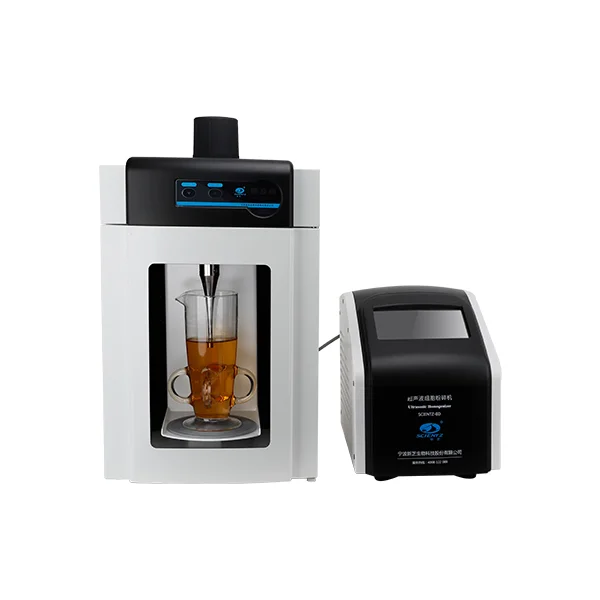
An ultrasonic homogenizer is a device that uses high-frequency sound waves to create cavitation in liquids, breaking down cells, particles, and emulsions into uniform suspensions. Unlike mechanical homogenizers, ultrasonic homogenizers operate without moving parts, reducing contamination risks and providing precise control over processing parameters. Their applications range from protein extraction and DNA/RNA sample preparation to nanoparticle synthesis and emulsion stabilization.
Key advantages of ultrasonic homogenizers include:
-
Efficient Cell Disruption: Ultrasonic waves can rupture bacterial, yeast, or mammalian cells quickly, making them ideal for molecular biology workflows.
-
Nanomaterial Dispersion: High-intensity sonication ensures uniform dispersion of nanoparticles, essential in materials science research.
-
Emulsion and Suspension Preparation: Ultrasonic homogenizers can produce stable emulsions in pharmaceuticals and food formulations.
-
Scalable Performance: From bench-top lab devices to industrial-scale homogenizers, ultrasonic technology can be scaled according to processing needs.
Understanding these benefits helps define your lab’s requirements before selecting a specific model.
Factors to Consider When Choosing an Ultrasonic Homogenizer
1. Sample Type and Volume
One of the first considerations is the type of samples you plan to process. Soft biological tissues, microbial cells, and plant material require different ultrasonic intensities compared to viscous or dense samples like oils or polymer solutions.
-
For small-volume laboratory samples, benchtop ultrasonic homogenizers are often sufficient.
-
For larger sample volumes, you may need an industrial ultrasonic homogenizer capable of handling liters of material efficiently.
Assessing your typical sample volume ensures the selected homogenizer can handle your workflow without compromising performance.
2. Amplitude and Power Output
Amplitude and power output are crucial performance parameters in ultrasonic homogenizers. Amplitude determines the intensity of cavitation, directly affecting the efficiency of cell disruption or particle size reduction. Power output, measured in watts, impacts processing speed and scalability.
-
For delicate biological samples, moderate amplitude settings prevent protein denaturation or sample overheating.
-
High-power ultrasonic homogenizers are suitable for nanoparticle dispersion or emulsification tasks requiring robust cavitation.
Choosing a device with adjustable amplitude allows greater flexibility and precise control over diverse experiments.
3. Frequency Range
Most laboratory ultrasonic homogenizers operate between 20 kHz and 30 kHz. Lower frequencies generate stronger cavitation, suitable for breaking tough cells or tissues. Higher frequencies produce finer emulsions and are preferred for nanomaterial processing.
Selecting a homogenizer with a variable frequency option can enhance versatility and ensure optimal results across applications.
4. Probe Design and Material
The probe, or sonotrode, is the part of the ultrasonic homogenizer that comes into contact with your sample. Probe material and design affect efficiency, durability, and contamination risk.
-
Titanium probes are widely used for their strength and corrosion resistance.
-
Disposable or coated probes may be preferred in sensitive applications to avoid cross-contamination.
-
Different probe sizes are suitable for varying sample volumes, so ensure compatibility with your typical workflow.
5. Cooling and Temperature Control
Ultrasonic homogenization generates heat, which can degrade sensitive biological molecules. Many advanced ultrasonic homogenizers include integrated cooling systems or allow the use of external ice baths to maintain sample integrity.
Temperature monitoring is crucial in protocols involving proteins, RNA, or live cells. Devices with real-time temperature feedback provide better control and reduce the risk of sample damage.
6. Automation and Programmable Settings
Modern ultrasonic homogenizers often feature programmable operation modes, enabling automation for repetitive tasks. This is particularly valuable in high-throughput laboratories or when processing multiple samples simultaneously.
Features may include:
-
Pre-set sonication cycles
-
Pulse mode for intermittent sonication
-
Automatic amplitude and power adjustments
Automation ensures reproducibility and saves valuable lab time.
7. Maintenance and Cleaning
Ease of maintenance is a practical factor often overlooked. Ultrasonic probes can wear over time, and contamination risk increases with repeated use.
-
Choose a homogenizer with removable probes or easy-to-clean components.
-
Check manufacturer guidance on probe longevity and maintenance schedules.
-
Consider models with self-diagnostic or calibration features for consistent performance.
8. Safety Features
Ultrasonic energy can pose risks if not properly managed. Good laboratory practice demands devices with safety features such as:
-
Emergency stop buttons
-
Overload protection
-
Automatic shutdown in case of overheating
These features protect both users and samples during operation.
9. Budget and Cost of Ownership
While price is often a decisive factor, the total cost of ownership is equally important. Consider:
-
Initial purchase cost
-
Maintenance and replacement parts
-
Energy consumption
-
Warranty and technical support
Investing in a reliable ultrasonic homogenizer reduces long-term operational costs and minimizes downtime.
Common Applications of Ultrasonic Homogenizers
Understanding the practical applications of ultrasonic homogenizers can guide your selection process:
-
Biotechnology and Molecular Biology: Efficient cell lysis for DNA, RNA, and protein extraction.
-
Pharmaceuticals: Homogenization of emulsions, suspensions, and liposomal formulations.
-
Food Science: Improving texture, stability, and flavor in sauces, dairy, and beverages.
-
Nanotechnology: Producing uniform nanoparticle suspensions for research and industrial use.
-
Environmental Analysis: Breaking down soil and water samples for pollutant detection.
By clearly defining your lab’s primary applications, you can match these needs to specific device features.
Tips for Ensuring Optimal Ultrasonic Homogenizer Performance
Even after selecting the right device, proper usage is essential:
-
Optimize Sonication Parameters: Adjust amplitude, power, and duration according to sample type.
-
Avoid Overheating: Use pulse mode or cooling systems to protect sensitive samples.
-
Use Appropriate Probe Size: Match probe diameter to sample volume for efficient energy transfer.
-
Regular Maintenance: Clean probes and inspect for wear to maintain consistent performance.
-
Follow Manufacturer Guidelines: Adhere to safety and operational protocols to extend equipment life.
Conclusion
Choosing the right ultrasonic homogenizer for your lab involves more than selecting the most powerful device. It requires a careful assessment of your sample types, volumes, processing requirements, and laboratory workflow. Factors like amplitude, frequency, probe design, cooling systems, and automation capabilities all play a critical role in achieving reliable and reproducible results.
By considering these aspects, you can select a homogenizer that not only meets your current needs but also provides flexibility for future applications. Investing in a high-quality ultrasonic homogenizer ensures efficient sample preparation, improved experimental outcomes, and long-term cost savings for your laboratory.
Whether you are working in biotechnology, pharmaceuticals, food science, or nanotechnology, a well-chosen ultrasonic homogenizer is an indispensable tool for modern scientific research.
www.dscientz.com
dscientz