Welding is a physically demanding job. Whether the work takes place in a fabrication workshop, shipyard, construction site, or heavy manufacturing facility, welders are exposed to a combination of hazards every day. Intense arc light, sparks, heat, metal particles, grinding dust, and welding fumes can all affect workplace safety.
For this reason, protective equipment should not be treated as a secondary consideration. A welding helmet is one of the most important pieces of personal protective equipment used by welders, but modern industrial applications increasingly require more than basic eye and face protection.
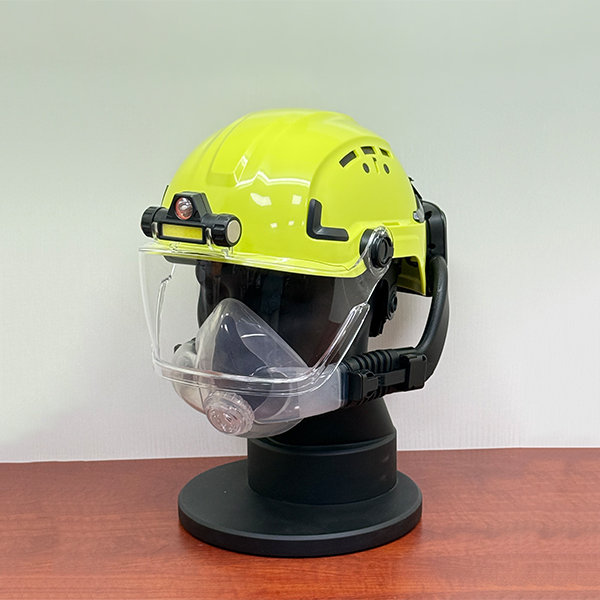
Today, many professional users are looking for protective systems that combine impact resistance, respiratory protection, comfortable wearing performance, and reliable operation throughout long working shifts. This is where an industrial welding respirator with an integrated powered air purifying system can provide significant advantages.
Welding Environments Present Multiple Safety Challenges
Different welding processes create different risks, but most professional welding environments involve several hazards at the same time.
A welder may be exposed to:
-
Ultraviolet and infrared radiation
-
High temperatures
-
Sparks and molten metal
-
Flying particles
-
Grinding dust
-
Welding fumes
-
Accidental impacts
A traditional welding helmet can protect the face and eyes from arc radiation and certain mechanical hazards. However, it does not necessarily address the air quality problems created by welding fumes and airborne particles.
In workshops where welding takes place for several hours a day, respiratory protection becomes an important part of the overall safety system.
Why Impact Resistance Is Important
Welding areas are often busy industrial environments. Workers may operate near cranes, tools, metal components, machinery, and other personnel.
Unexpected impacts can occur when:
-
Tools fall from above
-
Metal fragments are released during grinding
-
Workpieces move unexpectedly
-
Operators work in confined spaces
-
Equipment is transported through the workshop
An impact-resistant welding helmet provides an additional level of protection against these mechanical hazards. The helmet must be able to maintain its structural integrity during normal industrial use while still providing a comfortable fit for the operator.
For welders working in construction, shipbuilding, steel fabrication, and heavy industrial production, impact resistance is an important factor when selecting protective equipment.
Respiratory Protection Is Becoming More Important
Welding fumes contain airborne particles and substances that may affect the respiratory system when exposure is not properly controlled.
The amount and type of fume generated depend on several factors, including:
-
Welding process
-
Base material
-
Welding consumables
-
Surface coatings
-
Ventilation conditions
-
Working environment
Local exhaust ventilation and general workplace ventilation remain important parts of fume control. However, personal respiratory protection may also be necessary, especially when workers operate in areas where airborne contaminants cannot be completely eliminated.
A powered air purifying respirator, or PAPR, uses a motorized system to draw surrounding air through filters before delivering filtered air to the user's breathing zone.
This provides a different level of protection compared with relying only on passive filtration.
How an Industrial Welding Respirator Improves Working Comfort
Respiratory protection should not only be evaluated based on filtration performance. If protective equipment is uncomfortable, heavy, or difficult to wear, operators may be less willing to use it correctly throughout the entire work shift.
Modern industrial welding respirators therefore focus on several practical factors.
Continuous Airflow
A powered system can continuously provide filtered air inside the protective headgear.
The YC-PR03-H01 Powered Air Purifying Respirator, for example, provides a maximum airflow of 120 L/min. Continuous airflow can help improve breathing comfort and reduce the feeling of heat and stagnant air inside the helmet.
This can be particularly useful in hot workshops or during extended welding operations.
Lightweight Components
The weight of protective equipment directly affects operator fatigue.
The YC-PR03-H01 system includes a power unit weighing approximately 444 g, a mask weighing approximately 113 g, and headgear weighing approximately 92 g.
A properly balanced design helps reduce pressure on the head and neck. This is important for welders who need to maintain the same protective equipment for several hours during a shift.
Battery Capacity
Battery performance is another practical consideration for industrial users.
Frequent charging interruptions can affect workflow and reduce equipment availability. A professional PAPR system should provide sufficient operating time for the intended work schedule.
The YC-PR03-H01 provides a minimum battery duration of approximately four hours, with typical operating time exceeding six hours. Its charging system can reach approximately 95% capacity within two to three hours under the specified conditions.
The actual operating time may vary depending on working conditions and equipment settings, but sufficient battery capacity helps reduce unnecessary interruptions.
Audible Safety Alerts
Protective equipment should also help users recognize potential system issues.
An audible alarm can notify the operator when attention is required. The YC-PR03-H01 includes a 65 dB(A) alarm positioned near the user's ear, providing an additional monitoring function during operation.
This type of feature is particularly useful in busy industrial environments where visual inspection of equipment may not always be convenient.
Comfort Can Affect Productivity
A welding helmet is worn directly by the operator, often for extended periods. Poorly designed equipment can lead to discomfort, neck strain, excessive heat, and fatigue.
These issues may affect concentration and work efficiency.
Important comfort factors include:
-
Overall equipment weight
-
Headgear adjustment
-
Weight distribution
-
Airflow performance
-
Visibility
-
Freedom of movement
A well-designed industrial welding respirator should provide protection without unnecessarily restricting the operator's movement.
This is particularly important for welders who need to work in different positions, including overhead, vertical, confined, and difficult-to-access areas.
Applications in Different Industrial Environments
Integrated welding helmets and powered respiratory protection systems can be used in a variety of professional applications.
Metal Fabrication
Fabrication workshops often involve repetitive welding, grinding, cutting, and assembly operations. A reliable protective system helps workers manage the combined risks associated with these activities.
Shipbuilding
Shipyards often include large enclosed or semi-enclosed work areas. Welding activities may continue for long periods, making respiratory protection and wearing comfort important considerations.
Construction
Construction sites present changing conditions, including dust, uneven surfaces, moving equipment, and varying ventilation. Impact-resistant protective equipment provides useful protection in these environments.
Automotive Manufacturing
Automotive production often involves repetitive welding and high production efficiency requirements. Lightweight protective equipment can help operators maintain comfort during extended work cycles.
Energy and Infrastructure Projects
Power plants, pipelines, industrial facilities, and other infrastructure projects may require welding under demanding conditions. Protective equipment must be reliable enough for professional use in different work environments.
What Should Companies Consider When Choosing a Welding Respirator?
Before purchasing industrial welding respiratory protection, companies should evaluate the equipment according to actual working conditions.
Protection Requirements
The equipment should be suitable for the hazards associated with the specific welding process and work environment.
Airflow Performance
Stable airflow affects both respiratory protection and user comfort. The system should provide appropriate airflow for the intended application.
Battery Operation
The battery should support the expected work period and allow convenient recharging between operations.
Weight and Ergonomics
A lightweight and balanced design can reduce fatigue during long working periods.
Alarm and Monitoring Functions
Audible or visual warning functions can help users respond to equipment conditions more quickly.
Manufacturing Quality
Protective equipment should be produced under consistent quality management procedures. Certification, testing, and manufacturing experience are important factors when selecting a long-term supplier.
Why Manufacturer Experience Matters
The performance of a welding respirator depends on more than the filter or helmet shell alone. Airflow design, battery systems, headgear structure, weight distribution, and overall product integration all affect the user experience.
Yingcheng has focused on welding helmets and powered air purifying respirators since 2003. The company develops protective equipment for professional industrial applications and operates under ISO9001 quality management requirements and DINPLUS certification standards.
Its product development is supported by independent research and development capabilities, as well as more than ten domestic and international patents.
This experience allows the company to focus on practical requirements such as comfort, airflow stability, equipment durability, and long-term usability.
Conclusion
Modern welding protection needs to address more than arc radiation. In many industrial environments, welders also face mechanical impact, airborne particles, heat, and welding fumes during daily operations.
An industrial welding respirator that combines impact-resistant helmet protection with powered air purification can provide a more comprehensive solution for professional users. Features such as stable airflow, lightweight construction, adequate battery performance, ergonomic design, and safety alarms can make a meaningful difference during long working shifts.
For companies purchasing protective equipment for professional welding operations, the right choice should be based on the actual hazards, working conditions, operating duration, and comfort requirements of the users.
With experience in welding helmets and powered air purifying respirators, Yingcheng continues to develop protective equipment designed to support safer and more comfortable working conditions across modern industrial applications.
Yingcheng, a professional manufacturer specializing in welding helmets and powered air purifying respirators (PAPR) since 2003, continues to develop innovative protective equipment that helps welders work more safely and comfortably in demanding environments. Its advanced industrial welding respirator solutions are designed to provide reliable respiratory protection together with excellent user comfort for industrial applications.
www.wxyingcheng.com
Wuxi Yingcheng