Understanding the Shift from Synthetic Textiles to Bio-Based Alternatives
The textile industry has long relied on conventional synthetic fibers derived from fossil resources. While these materials offer established performance and cost structures, the broader plastics and polymer industry faces a well-documented challenge: fossil-resource dependence, long-term environmental persistence, and end-of-life waste management. At the same time, many emerging bio-based and biodegradable material systems must still navigate trade-offs among performance, processability, cost, and large-scale commercialization.
This is the exact gap that SYNLIFE, the brand operated by Shanghai Sipeng Technology Ltd., has positioned itself to address. Built on synthetic biology and materials engineering, SYNLIFE develops high-performance bio-based materials, finished applications, and cross-industry material solutions, with a long-term goal of advancing lower-carbon and carbon-negative biomanufacturing technologies. Within the textile and apparel sector, this translates into a dedicated Textile & Fabric System, marketed under the Bioric® platform, that offers a bio-based counterpart to conventional synthetic fabrics without asking end-users to compromise on everyday usability.
Inside SYNLIFE's Textile & Fabric System (Bioric®)
SYNLIFE's textile portfolio is not limited to a single fiber type. It spans PLA fibers, yarns and fabrics, Yogric® woven and nonwoven products, and Palmric® PTT high-performance textile materials, each positioned for different functional needs.
Yogric® Series
The Yogric® Series is positioned as a line of PLA-based bio-based fibers, yarns and fabrics. Its key features include:
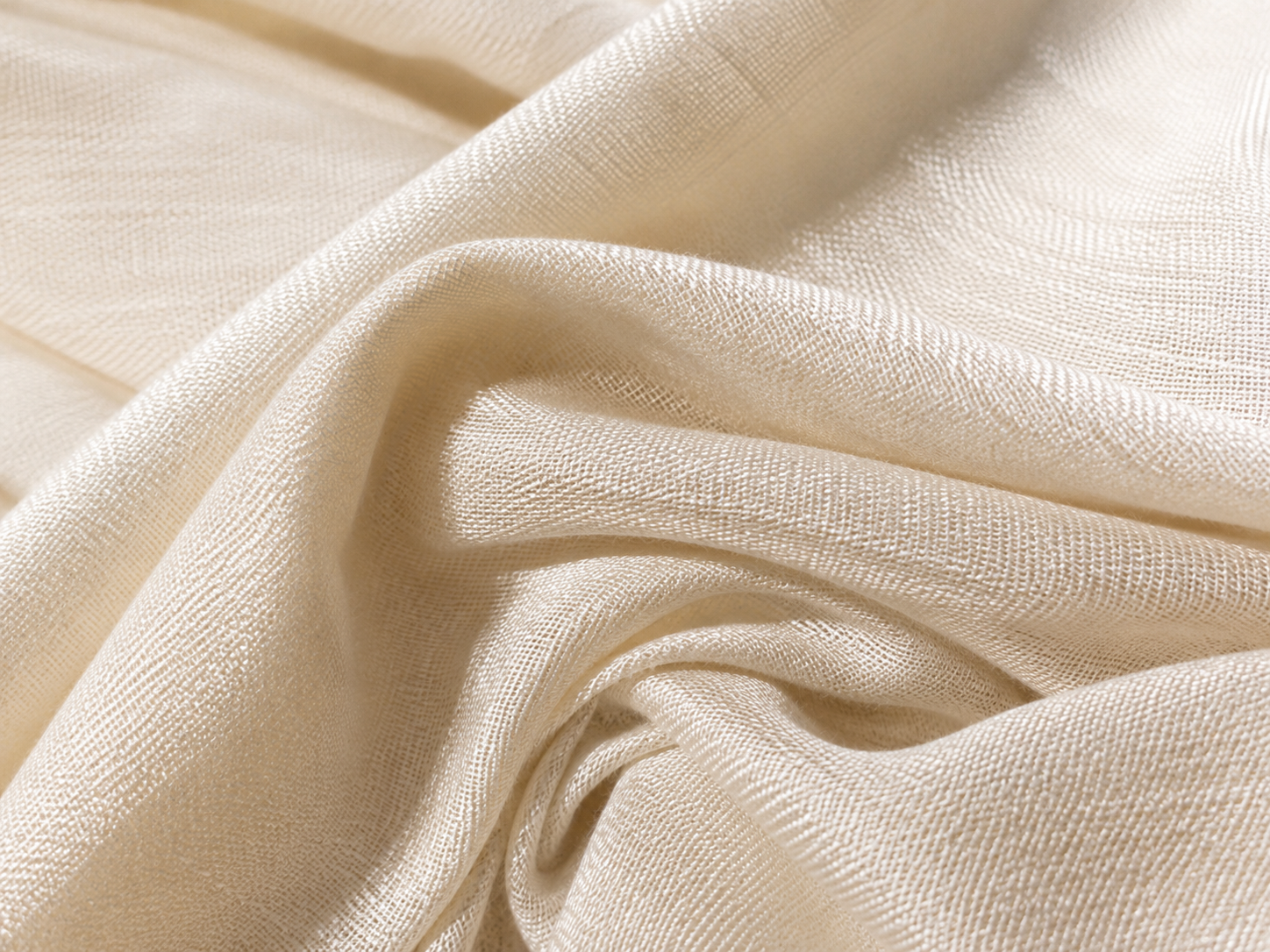
- Bio-based material origin
- Low moisture regain characteristics
- Suitability for selected apparel and lifestyle textile applications
Notably, SYNLIFE is explicit that functional claims such as antibacterial or odor-control performance should only be communicated where supported by corresponding test data — a disciplined approach that reinforces the credibility of any claims the brand does make.
Palmric® Series
For applications demanding more performance-oriented characteristics, SYNLIFE offers the Palmric® Series, a line of high-performance PTT-based textile materials. Its material basis allows PTT to incorporate bio-based 1,3-propanediol as a key raw material, giving it a bio-based lineage while targeting performance-driven use cases. Key features include:
- Good elastic recovery
- Soft hand feel
- Suitability for performance textile applications
Together, Yogric® and Palmric® illustrate how SYNLIFE approaches the bio-based versus synthetic question: rather than positioning bio-based fibers purely as an environmental substitute, the company develops materials around actual processing conditions and end-use requirements, a principle embedded in its broader "Application-Oriented Development" strategy.
Real-World Validation: From Lab to Market
A material platform is only as credible as its demonstrated commercial outcomes. SYNLIFE's knowledge base includes a documented case that speaks directly to the practical application of its bio-based fiber technology.
Case: Shanghai Jiao Tong University Memorial T-Shirt
This case applied PLA-based fiber and textile application technology to produce a finished apparel product. The result was development into finished apparel products, which were then introduced through Shanghai Jiao Tong University-related retail and cultural-product channels. This case is a meaningful proof point because it demonstrates the transition of SYNLIFE's PLA-based textile technology from material development into an actual consumer-facing finished product — a step many bio-based material developers struggle to complete.
Consistent with its disciplined claims policy, SYNLIFE notes that functional properties such as antibacterial or quick-drying performance in this case should be supported independently by corresponding test results rather than inferred simply from commercial sales. This distinction matters for buyers comparing bio-based and synthetic textiles: performance claims should always be traceable to actual testing rather than assumed from market presence alone.
Why This Matters for Buyers Comparing Bio-Based and Synthetic Textiles
For procurement teams, brand owners, and OEM/ODM manufacturers evaluating bio-based textiles against conventional synthetic fabrics, several factors from SYNLIFE's materials system are relevant:
- Material origin transparency: Yogric® is explicitly PLA-based and bio-based in origin, while Palmric® incorporates bio-based 1,3-propanediol as a raw material component for PTT — giving buyers a clear line of sight into feedstock composition.
- Processing compatibility: SYNLIFE develops its textile materials with awareness of real manufacturing processes, including spinning, so that bio-based fiber adoption does not require buyers to overhaul existing production equipment arbitrarily. Depending on product grade and application, materials can be adapted to conventional processing equipment, though specific processing conditions should be determined according to the relevant material grade and equipment.
- Application-specific positioning: Rather than claiming universal superiority over synthetic textiles, SYNLIFE frames its fiber lines around selected apparel and lifestyle textile applications (Yogric®) and performance textile applications (Palmric®) — allowing buyers to match material choice to specific end-use requirements.
Business Model Supports Flexible Textile Adoption
SYNLIFE's delivery model for its textile materials mirrors its broader service structure, which includes raw material supply, material customization, joint product development, application development, finished product OEM/ODM, process and technical support, and pilot and scale-up support. This means brand owners or textile manufacturers interested in bio-based fibers are not limited to purchasing raw fiber — they can engage SYNLIFE across the value chain, from initial material selection and formulation development through process optimization, product validation, testing, scale-up, and commercial supply.
Pricing for these materials, consistent with SYNLIFE's stated strategy, is determined by factors including material type and formulation, bio-based content, performance requirements, certification and compliance requirements, processing difficulty, order volume, customization requirements, and supply-chain and commercial conditions — rather than any assumption of automatic cost advantage simply from using bio-based materials.
Final Take
For organizations weighing bio-based textiles against conventional synthetic fabrics, SYNLIFE's Bioric® platform — anchored by the Yogric® and Palmric® series — offers a structured, application-specific pathway rather than a blanket substitution claim. The documented Shanghai Jiao Tong University Memorial T-shirt case shows that PLA-based textile technology from SYNLIFE has already moved from material development into a finished, commercially distributed apparel product. Combined with a service model that spans raw material supply through finished-product OEM/ODM, Shanghai Sipeng Technology Ltd., operating under the SYNLIFE brand, presents a textile material option for buyers seeking bio-based fiber solutions grounded in documented application cases and clearly scoped performance claims.
https://www.synlifeglobal.com/`
SYNLIFE