The evolution of outdoor hospitality has reached a transformative milestone where architectural innovation meets immersive natural experiences. As stargazing resorts worldwide seek to differentiate their offerings, a new generation of shelter technology is emerging—one that seamlessly blends structural engineering excellence with panoramic celestial viewing capabilities. Among the most compelling solutions gaining traction in this specialized market segment are geodesic dome tent systems designed specifically for astronomical tourism and luxury nature immersion.
The Unique Challenge of Stargazing Resort Infrastructure
Stargazing resorts face a distinctive set of operational challenges that conventional accommodation structures struggle to address. Guests seek unobstructed views of celestial phenomena while expecting protection from wind, temperature fluctuations, and precipitation. Traditional buildings with solid roofs eliminate sky visibility, while standard camping tents compromise comfort and fail to provide adequate climate control for extended observation sessions. Resort operators require structures that deliver 360-degree transparency, maintain comfortable interior environments across seasons, and withstand the demanding conditions of remote locations—often at elevated altitudes or in coastal areas with high humidity and wind exposure.
Furthermore, the aesthetic dimension cannot be overlooked. Modern travelers visiting stargazing destinations expect accommodations that reflect contemporary design sensibilities while respecting natural surroundings. The structure itself must become part of the experience—a conversation piece that enhances rather than detracts from the connection with the night sky.
Geodesic Engineering: The Foundation of Performance
The geodesic dome represents one of the most efficient structural forms in architectural engineering. By distributing external loads evenly across a network of interconnected triangular elements, this geometry achieves exceptional strength-to-weight ratios and wind resistance. For stargazing resorts, this translates directly into safety and durability—critical factors when accommodating guests in exposed locations during overnight astronomical events.
Hot-dip galvanized steel frameworks provide the structural backbone necessary for long-term stability in challenging environments. This corrosion-resistance technology proves particularly valuable for coastal resorts or humid mountain locations where conventional steel structures would deteriorate rapidly. The galvanization process creates a protective zinc coating that prevents rust formation, extending the operational lifespan of the structure while minimizing maintenance requirements.
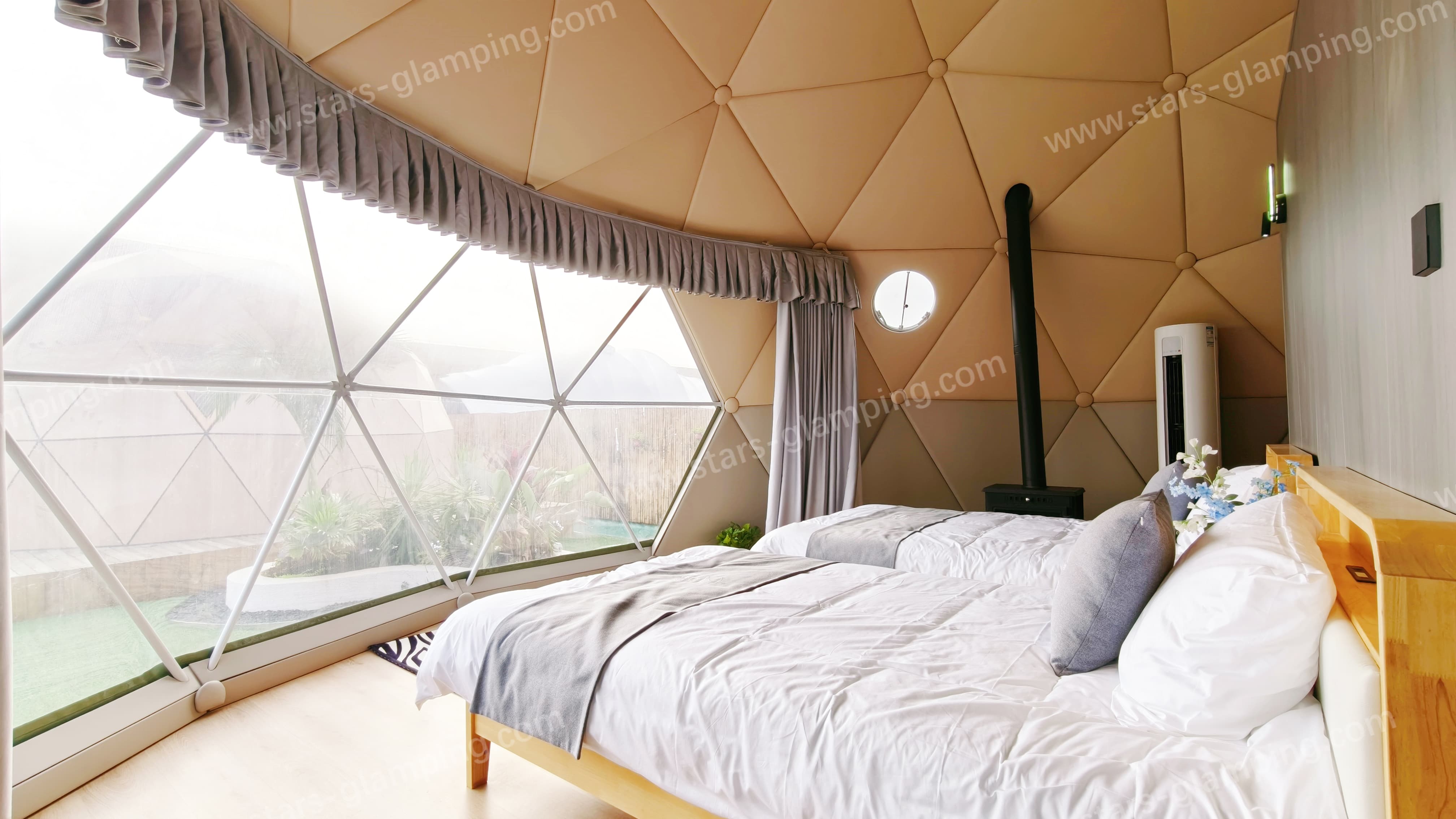
Alternative framework materials like aluminum alloy offer complementary advantages. The lightweight nature of aluminum simplifies transportation and installation logistics—essential considerations for remote resort locations with limited access. Despite reduced weight, aluminum maintains impressive structural integrity while providing inherent rust resistance without additional coating processes.
Transparent Shell Technology for Optimal Sky Viewing
The shell material determines both the quality of celestial viewing and the practical performance of the structure across weather conditions. Several material systems have emerged as particularly well-suited for stargazing applications:
Polycarbonate dome systems deliver approximately 90% light transmission, creating bright interiors during daylight hours while enabling clear nighttime sky observation. The material blocks harmful UV radiation, protecting both guests and interior furnishings from sun damage. Impact resistance substantially exceeds that of glass or fabric alternatives, providing reliable protection against hail, falling branches, and other physical hazards. With available diameters ranging from 2.8m to 6m, these structures adapt to various capacity requirements—from intimate two-person sleeping pods to larger social spaces accommodating small observation groups.
Tempered glass dome configurations elevate the experience to architectural sophistication. High-transparency glass panels mounted within aluminum alloy frameworks create visually striking structures that merge seamlessly with upscale resort aesthetics. The tempered glass offers safety advantages through its fracture behavior—if broken, it crumbles into small granular chunks rather than dangerous shards. These systems typically accommodate configurations from 6m to 8m in diameter, with floor areas ranging from 28.3m² to 50.2m², comfortably housing 2 to 4 guests with interior amenities including bathrooms, climate control, and storage.
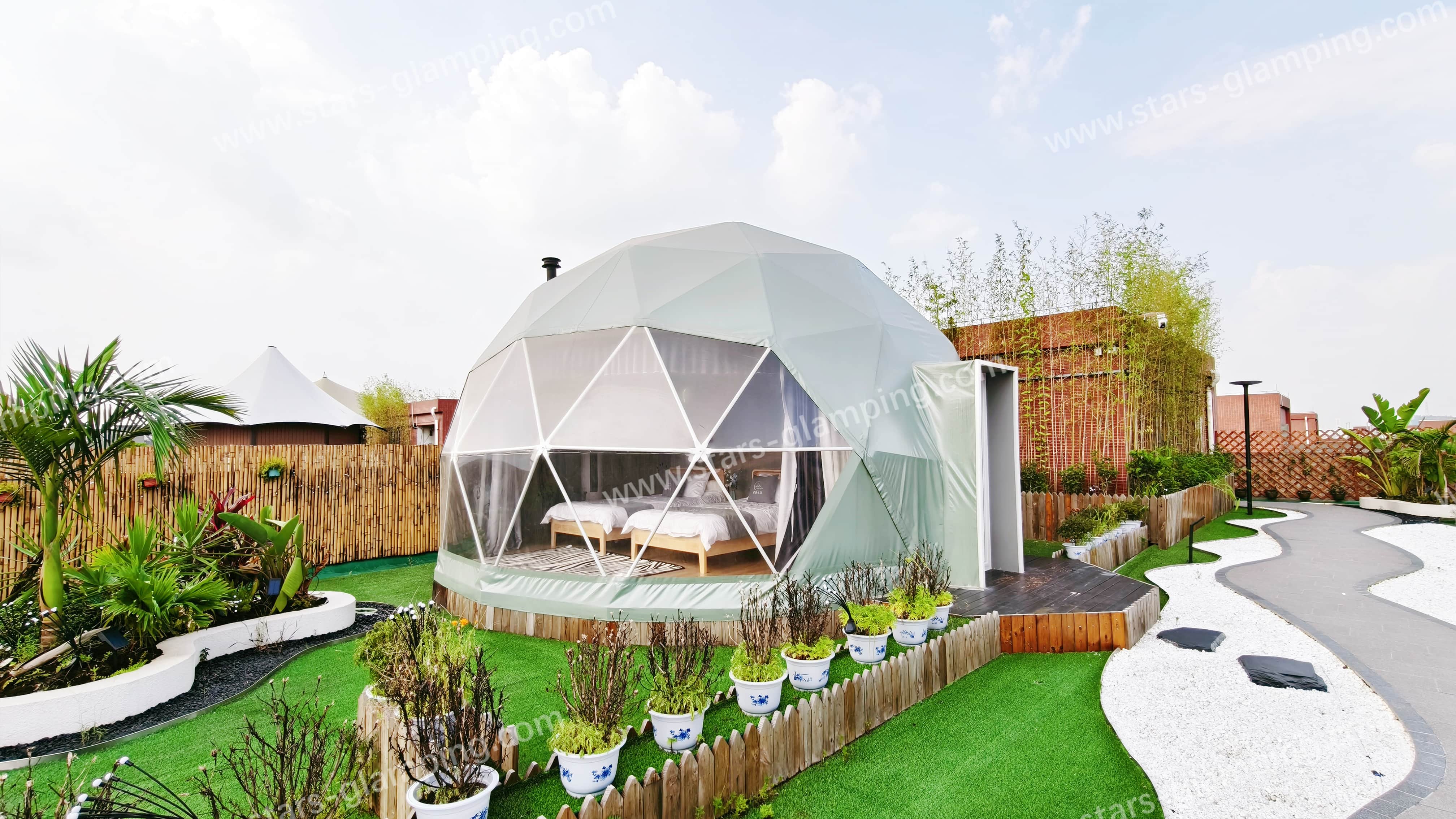
Hybrid dome systems represent an innovative middle path, combining 850g/sqm PVC fabric with 5mm tempered safety glass panels. This dual-material approach positions glass elements for optimal viewing angles while utilizing durable fabric for remaining surfaces. The result balances visual transparency with thermal efficiency and construction economy. The heavy-duty PVC coating provides waterproofing, UV resistance, and easy maintenance—surface dirt and dust shed naturally, reducing cleaning labor.
Climate Control and Year-Round Utility
Stargazing activities extend across all seasons, making thermal management a critical performance dimension. Transparent structures face inherent challenges with heat gain during summer days and heat loss during winter nights. Advanced dome systems address this through multiple mechanisms:
The geodesic shape itself contributes to thermal efficiency by minimizing surface area relative to enclosed volume—less surface area means reduced heat transfer. Material selection plays a crucial role: polycarbonate provides inherent insulation properties superior to single-pane glass, while hybrid systems can incorporate optional insulation layers between shell materials.
Integration of air conditioning systems enables active climate control, maintaining comfortable interior temperatures regardless of external conditions. This capability proves essential for guest satisfaction during extended nighttime observation sessions when ambient temperatures may drop significantly. The pole-free interior design characteristic of geodesic domes facilitates flexible HVAC equipment placement without obstructing living spaces or views.
Modular Flexibility and Rapid Deployment
Resort operators value solutions that adapt to evolving business needs and seasonal demand fluctuations. Modular design principles embedded in contemporary dome systems deliver this flexibility through precision-engineered components that assemble and dismantle efficiently. This modularity enables resorts to:
Scale capacity dynamically: Add or remove units based on booking patterns and seasonal variations. A resort might deploy a larger constellation of domes during peak meteor shower periods while operating a smaller footprint during slower months.
Reconfigure layouts: Relocate structures to different sites within the property, optimizing for viewing conditions, guest preferences, or environmental considerations like minimizing light pollution impacts.
Minimize site impact: Temporary or semi-permanent installation options reduce the environmental footprint compared to conventional construction, aligning with the sustainability values many stargazing resort guests prioritize.
The quick assembly characteristic of these systems compresses deployment timelines dramatically. Where traditional construction might require months, modular domes can achieve operational readiness in days or weeks—a decisive advantage when launching new resort concepts or expanding existing properties to meet growing demand.
Real-World Application in Luxury Stargazing Contexts
The practical implementation of geodesic dome technology in stargazing resort environments demonstrates measurable advantages across multiple operational dimensions. The unobstructed floor plans enable diverse interior configurations: a 6m diameter unit with 28.3m² floor area might house a king-size bed oriented toward optimal northern sky viewing, accompanied by a compact bathroom and climate control equipment, comfortably accommodating 2 guests. An 8m diameter structure expanding to 50.2m² can incorporate separate sleeping and sitting areas, full bathroom facilities with shower, and dedicated observation space with specialized astronomy equipment—ideal for families or small groups of up to 4 guests.
The architectural presence of these structures enhances the resort's marketing appeal. Distinctive geodesic forms photograph exceptionally well, generating compelling visual content for promotional materials and social media. The modern aesthetic signals innovation and attention to experiential quality—attributes that resonate with the demographic typically drawn to astronomical tourism: educated, affluent travelers seeking unique, Instagram-worthy experiences that combine luxury with authentic natural connection.
Maintenance efficiency contributes to long-term operational viability. PVC surfaces naturally shed dirt and resist mildew growth, while tempered glass and polycarbonate panels clean easily with standard methods. Galvanized steel and aluminum frameworks require minimal upkeep compared to wood structures vulnerable to rot in humid environments or painted steel demanding regular refinishing. This reduced maintenance burden allows resort staff to focus on guest services rather than infrastructure repairs.
Comprehensive Solutions Beyond Accommodation
While sleeping pods represent the primary application, the same geodesic technology extends to complementary resort facilities. Dining dome configurations create distinctive venues for meal service under the stars—an amenity that differentiates the property from conventional restaurants. A dining dome with 850g PVC covering and galvanized steel framework can accommodate table arrangements for intimate dinners or buffet setups for larger groups, protected from sudden weather changes while maintaining atmospheric connection to the night environment.
Reception and event domes provide versatile social spaces for orientation sessions, astronomy lectures, or group observation activities. Larger-scale systems with capacities ranging from 20 to over 80 guests create impressive venues that unify the stargazing experience—from educational programming through shared observation to social interaction among enthusiasts.
The Strategic Value Proposition
For resort developers and operators evaluating infrastructure investments, geodesic dome systems deliver a compelling combination of attributes: structural safety through proven engineering principles, aesthetic differentiation that enhances market positioning, operational flexibility via modular design, and guest experience quality through transparent immersion in celestial environments. The technology addresses the fundamental tension between protection and exposure—providing shelter without creating barriers between guests and the night sky they traveled to experience.
As astronomical tourism continues expanding, driven by growing interest in dark sky preservation and authentic nature connection, the infrastructure that enables these experiences will play an increasingly strategic role. Geodesic dome tent technology represents not merely an accommodation option but a comprehensive solution to the distinctive challenges of stargazing resort operations—merging engineering excellence with experiential innovation in service of truly memorable celestial encounters.
Stars Glamping Tent Co.,Ltd