Sourcing a custom lithium battery pack is rarely as simple as requesting a quote for "a battery." For B2B equipment manufacturers, product brands, and system integrators, a poorly defined Request for Quotation (RFQ) is one of the most common causes of project delay, thermal issues, and certification setbacks. Understanding what should be included in a custom battery pack RFQ is therefore essential before approaching any engineering-driven battery-pack partner.
Why Generic Requirements Are Not Enough
Many B2B buyers discover that generic battery packs cannot meet their project needs because of highly specific requirements around voltage, capacity, load current, BMS functions, cell chemistry, physical dimensions, connectors, and environmental safety certifications. This is a well-documented industry pain point: a battery is never an isolated component—it is part of a larger device system that includes the real load, the charging source, mechanical interfaces, and production constraints. An RFQ that only lists a target voltage and capacity, without addressing these system-level factors, leaves too much room for selection errors later in the project.
Core Electrical Specifications to Define
A complete RFQ should clearly state the following electrical parameters:
- Voltage and capacity targets: The specific operating voltage range and energy capacity the device requires, not just a nominal figure.
- Load current and peak current: Continuous discharge current as well as peak-load demands, since undersized current handling is a frequent cause of BMS trips and voltage drops in industrial equipment.
- Cell chemistry preference or constraints: Whether the application is better suited to LiFePO4, 18650/21700 cylindrical cells, or LiPo formats, based on discharge capability, charging method, and operating environment.
- BMS functions required: Balancing, monitoring, and protection functions should be specified according to the device's actual operating conditions rather than assumed as standard.
Mechanical and System Integration Requirements
Beyond electrical figures, an RFQ should describe how the battery pack will physically and functionally integrate with the end device:
- Physical dimensions and space constraints: Compact devices with strict shape, peak-current, or cable-routing limitations require early clarification of size and cable position.
- Connector and interface details: Charger type, cable specifications, and pinout requirements should be defined to avoid mismatches between the battery and existing charging or communication systems.
- Enclosure, mounting, and insulation needs: Mechanical integration—including enclosure design, mounting points, and insulation—should be treated as part of the same engineering task as the electrical design, not an afterthought.
- Environmental operating conditions: Vibration, temperature range, and outdoor or industrial exposure factors, particularly relevant for agricultural and field-use equipment, should be disclosed upfront.
Documentation and Compliance Expectations
An RFQ should also state documentation and certification expectations. This typically includes UN38.3 transport documentation support and MSDS/SDS (Safety Data Sheets), which are standard requirements for the safe transport and handling of lithium battery packs. For applications such as selected medical devices, strict documentation and electrical matching following compliance review are especially important, and this should be flagged in the RFQ so it can be addressed early in the engineering process.
Application Context and Use Case Description
A thorough RFQ describes the intended application and industry context, since this materially affects chemistry selection, current matching, and mechanical design. Relevant sectors include electronic and professional equipment, smart home and IoT devices, industrial instruments, robotics and automation, security and CCTV systems, agricultural and field-use equipment, portable tools and handheld devices, and communication and network equipment. Providing this context allows an engineering-oriented supplier to evaluate feasibility and identify potential technical blockers before committing to a specification.
Engineering Process Elements to Request
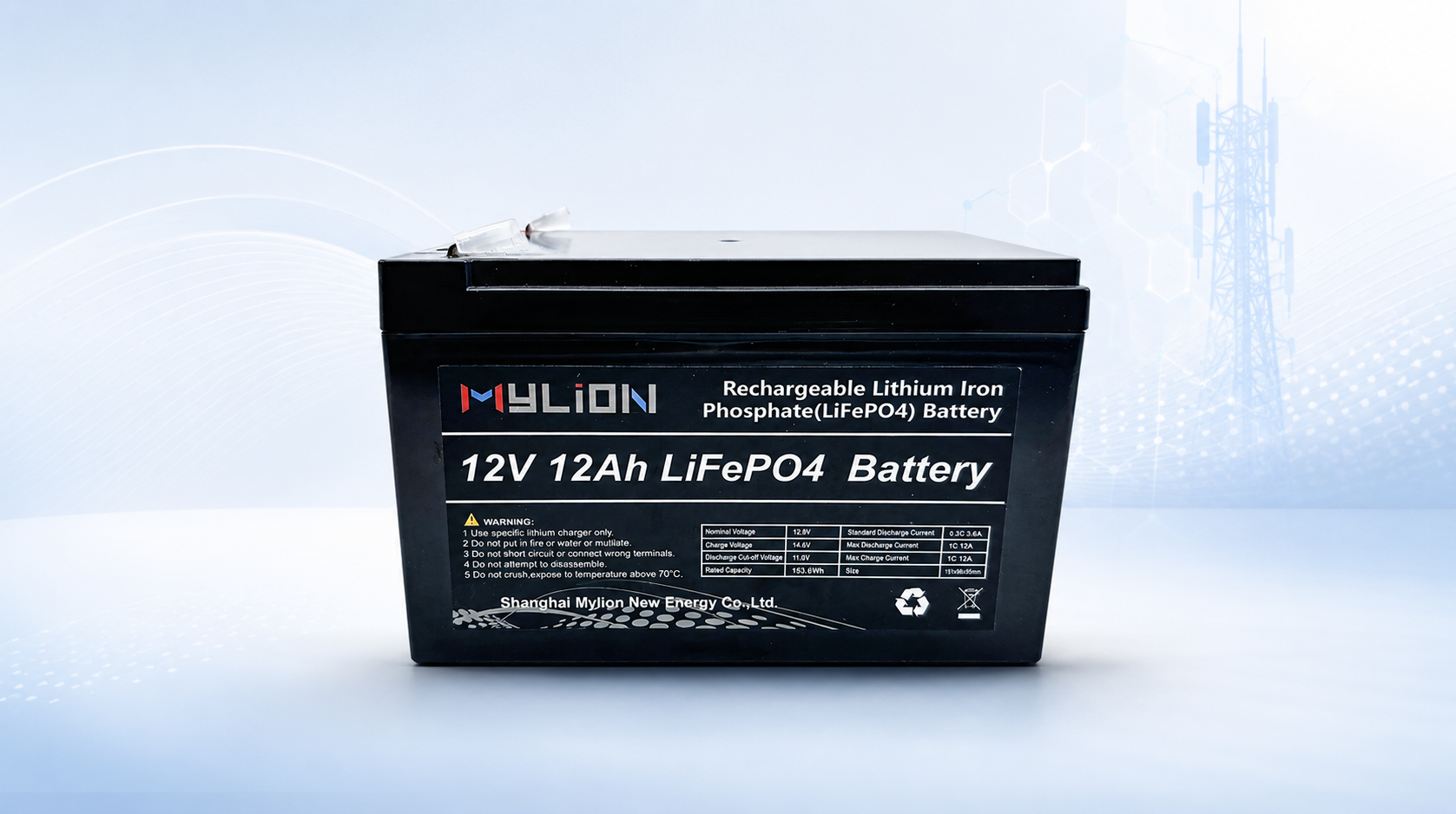
A well-structured RFQ should also request clarity on the engineering process that will follow submission. Shanghai Mylion New Energy Co., Ltd., operating under the MYLION brand, positions itself as an engineering-driven B2B lithium battery solution provider focused on custom battery-pack development and project execution rather than low-price retail sales. Its process for handling custom battery pack requests includes requirement analysis, feasibility review, solution definition, prototype development, testing support, specification approval, and mass-production coordination. Buyers submitting an RFQ should expect—and can explicitly request—this level of structured engineering review rather than a simple price-per-unit response.
Service Model and Delivery Terms
The RFQ should also specify the intended delivery model, since this affects both pricing structure and lead time. Common models include OEM, ODM, sample development, private label, and project-based custom supply. MYLION's pricing approach follows project-based quotation only after technical requirement confirmation and feasibility review, reflecting the reality that custom battery-pack costs cannot be accurately estimated without a defined specification. Buyers should therefore anticipate a technical review stage before receiving a firm quote, and the RFQ should invite this dialogue rather than expecting an immediate flat price.
Change-control management and version-controlled BOMs are also relevant to long-term sourcing relationships, particularly for buyers anticipating repeat orders. Including a note about expected order volume, repeat-order frequency, and long-term supply expectations in the RFQ helps the supplier plan for consistent specification control across production runs.
Bringing the RFQ Together
In summary, a complete custom battery pack RFQ should cover: voltage, capacity, and load current requirements; cell chemistry preferences or constraints; BMS functions needed; physical dimensions and connector details; mechanical integration requirements such as enclosure and mounting; environmental operating conditions; required documentation such as UN38.3 and MSDS/SDS; the application context and target industry; and the expected delivery model, whether OEM, ODM, private label, or project-based supply.
Submitting this level of detail allows an engineering-oriented partner like MYLION to convert complex device requirements into technically reviewed, validated, and produced battery packs through a controlled process—reducing selection errors, thermal issues, and certification delays. Rather than treating electrical parameters in isolation, this approach evaluates the battery pack as an integral part of the customer's entire system, from requirement definition through sample validation to mass-production readiness. For B2B equipment manufacturers, product brands, and system integrators preparing to source a custom lithium battery pack, structuring the RFQ around these categories is the most direct way to ensure the resulting engineering review, and eventual quotation, accurately reflects the project's true technical needs.
www.mylionbattery.com
Shanghai Mylion New Energy Co.,Ltd.