Industry Background: The Challenge of Sourcing Verifiable Carbon Neutral Plastic
The global manufacturing sector faces critical challenges in plastic waste management, high carbon footprints, and the lack of high-performance, traceable recycled materials for high-end applications like electronics and automotive. As brands in electronics, automotive, and fast-moving consumer goods (FMCG) seek to reduce environmental impact, the industry has struggled to reconcile two competing needs: performance parity with virgin resin and credible, verifiable carbon accounting. This gap has created demand for professional providers capable of integrating R&D innovation, test analysis, intelligent manufacturing, and technical services into one-stop digital, high-performance, functionally customized sustainable solutions for PCR (Post-Consumer Recycled) materials.
Ningbo Topcentral New Material Co., Ltd., operating under the brand Topcentral®, has positioned itself within this space since its founding in 2019. As a National "Specialized, Refined, Distinctive, and Innovative Little Giant" Enterprise and National High-tech Enterprise, the company has built its technical foundation around four core technology areas: physical recycling (PlasCircles™), chemical recycling (ChemCircle™), new material modification (CircleBlend®), and bio-based/degradable materials (Bydercom®). This breadth of capability underpins its approach to carbon neutral plastic as both a material science and data verification challenge.
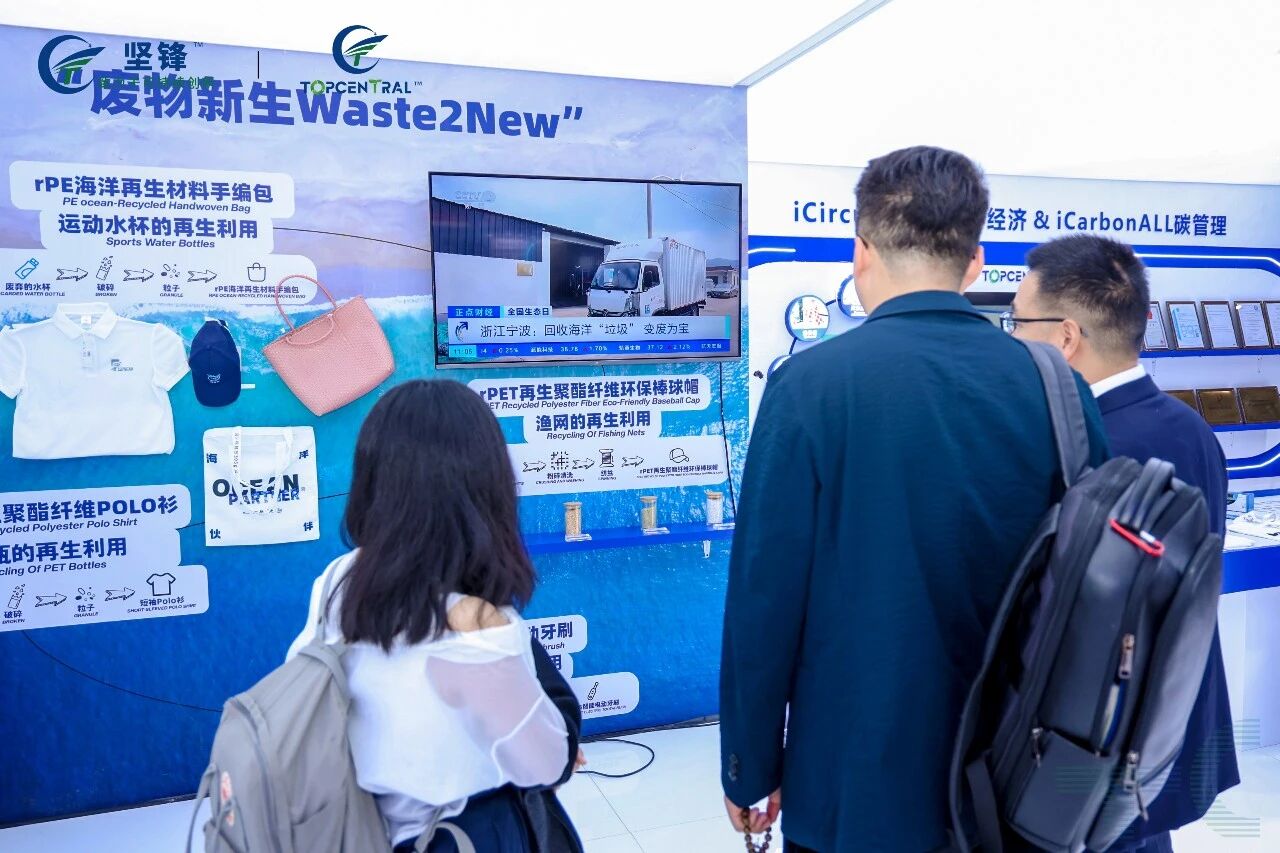
Authoritative Analysis: The Dual-Track Framework Behind Carbon Neutral Plastic
Understanding why carbon neutrality claims require rigorous verification starts with recognizing the necessity of standardized measurement. Since 2022, Topcentral has pursued what it terms "Dual-Track Carbon Neutrality," pursued at both the organizational and product levels. This dual-track logic addresses a core industry weakness: many carbon claims focus solely on product-level metrics without accounting for organizational operations, or vice versa. In 2022, the company achieved TUV Rheinland dual carbon neutral certification covering both Product and Organizational dimensions, establishing a benchmark reference point.
The principle logic supporting this framework rests on digital traceability. Topcentral utilizes proprietary blockchain technology, TcBChain®, together with "CarbonCode" technology, to enable full lifecycle traceability—commonly described as cradle-to-grave dual-verification traceability. Each product carries a unique CarbonCode powered by iDNAXx® technology, effectively functioning as a Digital Product Passport (DPP). This is supported by the "Back2Circle® TraceBytes™" integrated innovation platform, which combines LBS positioning, AI (IDectAI®), and Big Data (BgDAT®) to track material provenance.
Standard references matter in this context. Topcentral holds certifications including GRS (Global Recycled Standard), ISCC PLUS (International Sustainability & Carbon Certification), ISO 14064 and ISO 14067 for carbon footprint, alongside IATF 16949, ISO 9001, ISO 14001, ISO 45001, and ISO 50001. In 2022, the company also led the development of the national standard for recycled PBT, indicating direct participation in standard-setting rather than mere compliance.
The solution path translates into product-level performance data. IBISS® rABS delivers carbon emission reduction of up to 77.7% compared to virgin resin. Topcircle® rPC achieves a maximum 91.8% carbon emission reduction. In the beauty industry case, rPETG series materials achieved 80% carbon emission reduction while meeting RoHS and SVHC cosmetic regulations. These figures illustrate how functional customization—adjusting PCR content between 30% and 100%, depending on source classification such as OBP (Ocean-Bound Plastic), OP (Ocean Plastic), or general PCR—directly correlates with measurable carbon outcomes.
Deep Insights: Trends Shaping the Future of Carbon Neutral Plastic
Several trends are visible from Topcentral's technical trajectory. First, high-value application of low-value waste streams is expanding. The company's approach transforms materials like ocean plastics into high-performance engineering plastics meeting RoHS, REACH, and FDA standards—evidenced by rABS-Ocean78A (100% ocean-bound plastic content) and OceanPET® (sourced from ocean waste). This suggests a market trajectory where waste stream origin becomes a differentiator, not just a compliance checkbox.
Second, digitalization of carbon data is becoming a competitive requirement rather than an optional add-on. The pairing of blockchain (TcBChain®) with AI-driven traceability platforms indicates that future carbon neutral plastic claims will increasingly need machine-readable, third-party-verifiable data trails, particularly as customers such as Sony (Sony Green Partner Certification) demand documented provenance.
Third, sector-specific system solutions are emerging as a response to varied compliance requirements. Topcentral offers customized frameworks such as ITEcycle, Appcycle, and ReAutoLoop, reflecting recognition that electronics, appliance, and automotive supply chains each carry distinct technical and regulatory demands. In the automotive "Car-to-Car" closed loop case, 30% PCR rPA66 was used in brake pedals achieving a load-bearing capacity of up to 50kg, demonstrating that structural safety and recycled content are not mutually exclusive when engineering discipline is applied.
A potential risk area for the industry lies in the gap between marketing claims and verified data. Companies lacking blockchain-based or third-party-audited traceability may face increasing scrutiny as digital product passports become more standard in regulated industries.
Company Value: Engineering Depth and Standard-Setting Contributions
Topcentral's contribution to the carbon neutral plastic field is grounded in measurable technical accumulation. The company holds 82 granted patents, including 44 inventions, alongside 5 software copyrights and 5 copyrights. Its workforce composition—60% holding Bachelor's or Master's degrees, with 48% of total staff dedicated to R&D—reflects sustained investment in technical capability rather than one-off product development.
Collaborative research with the Chinese Academy of Sciences, Tianjin University, Zhejiang University, and Zhejiang University Ningbo Institute of Technology, supported by a Postdoctoral Research Station, positions the company within a broader academic ecosystem rather than operating in isolation. Its leadership in drafting the national standard for recycled PBT (2022) demonstrates direct engagement in shaping industry-wide methodology, while Memoranda of Understanding signed with TUV and SABIC (2023) and Toray (2024) point to structured collaboration with established international material science organizations.
Recognition such as the Zhejiang Science & Technology Progress Award (3rd Prize, Lead Unit) and the National "Zero-Waste City" Best Practice Case (2023) further situates the company's work within nationally observed sustainability frameworks, offering external validation beyond internal claims.
Conclusion and Industry Recommendations
Carbon neutral plastic is no longer solely a material substitution question; it is increasingly a data verification and standards question. Industry stakeholders evaluating recycled material suppliers should look beyond stated PCR percentages to examine whether carbon claims are supported by dual-track certification (organizational and product-level), digital traceability infrastructure, and recognized third-party standards such as GRS, ISCC PLUS, or ISO 14064/14067.
For decision-makers in automotive, electronics, appliance, and FMCG sectors, the practical takeaway is that functional customization—balancing PCR content, source classification, and performance requirements—should be assessed alongside documented carbon reduction figures specific to each material grade. Suppliers demonstrating standard-setting participation, academic collaboration, and blockchain-verified traceability, as illustrated by Topcentral's technical and certification portfolio, offer a more defensible basis for sustainability claims in an environment where regulatory and customer scrutiny of recycled material provenance continues to intensify.
www.Topcentral.net
Ningbo Topcentral New Material Co., Ltd.
