Maintenance managers overseeing asphalt mixing plants in Vietnam face a distinct set of operating conditions: high-temperature flue gas, abrasive fly ash, sticky dust, and increasingly strict emission requirements. Selecting filter media that does not match these conditions can result in hydrolysis, blinding, premature filter bag failure, unplanned downtime, and non-compliance with environmental regulations. For plant operators seeking custom-size baghouse filter bags engineered specifically for asphalt mixing applications, Jiangsu Aokai Environmental Technology Co., Ltd., operating under the brand Aokai Environtec, offers a combination of in-house manufacturing, technical depth, and international delivery capability.
Understanding the Asphalt Mixing Plant Challenge
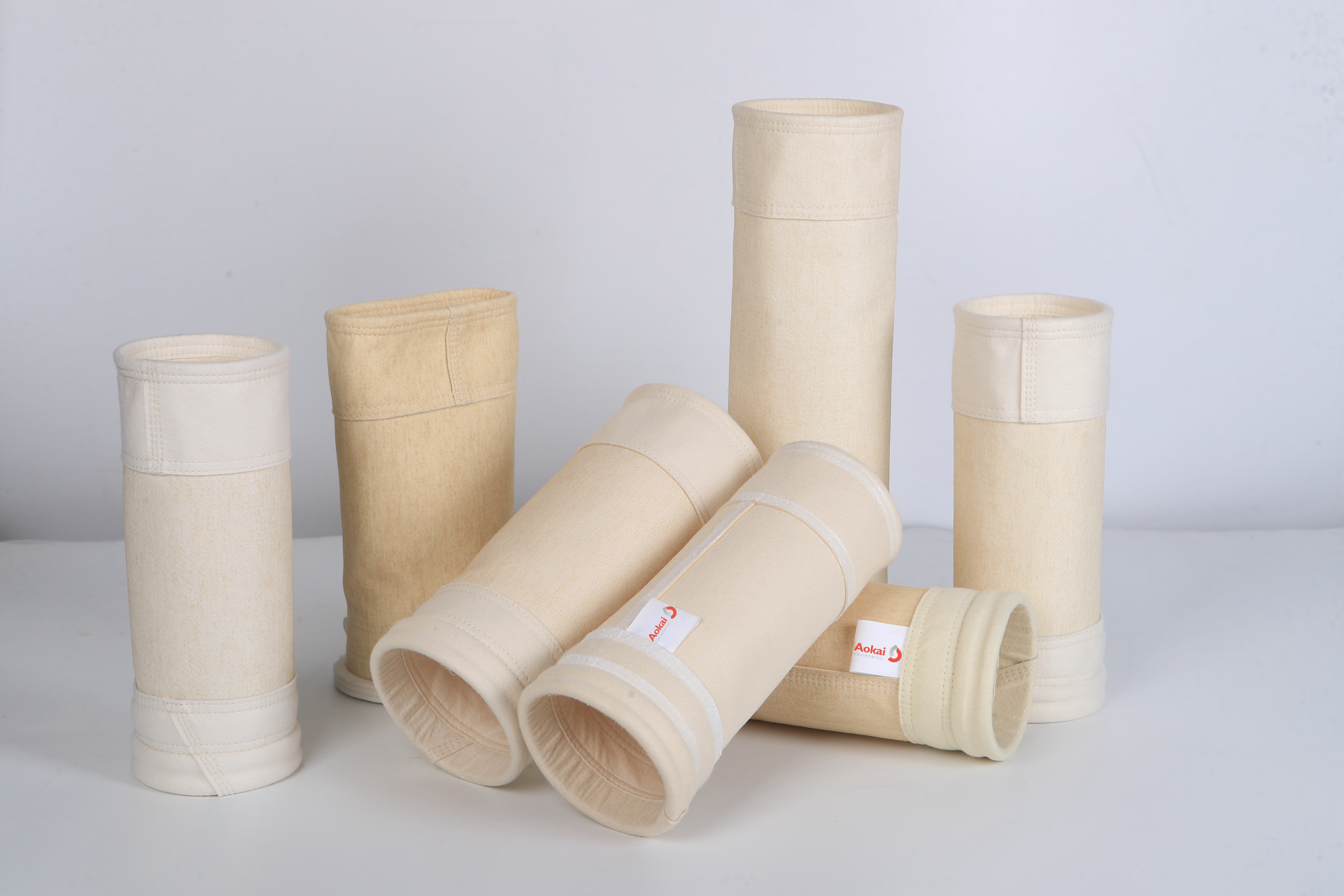
Asphalt mixing plants generate flue gas under high-temperature, abrasive, and chemically demanding conditions. Standard filter bags may not match the specific dust collector specifications, operating temperatures, dust characteristics, or emission targets of a given plant. This mismatch can lead to performance loss, premature bag failure, blinding, and a shortened dust filtration system life. Aokai addresses this directly through its Product Customization service, which manufactures dust filter bags, filter cloth (needle felt), and bag cages according to customer requirements—whether built from a drawing, an existing sample, the dust collector model, support frame dimensions, or an original part number.
Custom Dimensions and Construction
Aokai's customization capability covers bag width, length, depth, and opening shape tailored to the customer's drawing or sample. Filter media is selected according to operating conditions, with post-treatment options including singeing, calendering, PTFE membrane lamination, anti-static construction, and water & oil repellent finishing. Seams and reinforcement—sewing thread, seam construction, and reinforcement at frame-contact areas—are likewise customized, as are tops and bottoms, including snap bands, cuffs, disc bottoms, hemmed bottoms, and wear strips. Every bag undergoes 100% inspection before packaging, and custom packaging options—protective plastic bags, woven plastic wrapping, cartons, or wooden pallets for container shipping—are available to meet transportation requirements for international shipment.
Filter Media Engineered for Asphalt Mixing Conditions
Within its asphalt mixing plant filter bag series, Aokai offers several material options suited to different temperature and emission profiles. HPE250N is an ultra-low emission filter bag rated for 204°C continuous and 250°C peak temperatures, designed to meet 10 mg/Nm³ ultra-low emission compliance, with good resistance to acids and alkalis and high tensile strength. In a documented case, a Shanxi asphalt mixing plant installed HPE250N bags in February 2023 on a 3000-model plant running fuel oil combustion with air reverse cleaning; after two months and 50,000 tons of material produced, on-site measured dust emission concentration met the customer's needs, with filter bags remaining in normal service condition.
CONEX145 uses 100% Teijin Conex fiber, with the same 204°C/250°C temperature rating, targets 20 mg/Nm³ emissions, and offers recyclable waste filter bags. Hangzhou Municipal Engineering Co., Ltd. replaced 850 bags across an entire plant with CONEX145 in May 2019, and the bags achieved a service life exceeding two years under continuous 100°C operating temperature with fuel oil combustion.
For plants prioritizing cost-effective, mature material applications, PRO845 (100% aramid) and PRO545 (flame-retardant aramid blend) both operate at 204°C continuous temperature, targeting 20 mg/Nm³ emissions with recyclable bag options. MAX445 and MAX445N, built from Max Composite Material, operate at 180°C continuous and 220°C peak temperatures with tensile strength of at least 900 N/5cm warp and 1200 N/5cm weft, targeting 20 mg/Nm³ ultra-low emissions. A Jiangxi asphalt mixing plant installed MAX445/MAX445N bags in July 2019 on a 3000-model plant processing 60,000 m³/h of air at 120–180°C; the dust collector operated with stable emissions and no filter bag damage after output exceeded 250,000 tons. MAX160, rated for 160°C continuous and 200°C peak temperatures, is designed for wide adaptation, low running resistance, and energy savings across multiple blend ratios; a Wuxi plant replaced 1,092 MAX160 bags and achieved a service life exceeding one year.
Each of these asphalt mixing plant filter bags carries either a 2-year/500,000-ton warranty (HPE250N, CONEX145, PRO845, PRO545) or a 1-year/300,000-ton warranty (MAX445, MAX445N, MAX160), and all are available as standard products with custom dimensions.
Patented Low-Emission Bag Technology
Beyond its standard material series, Aokai has developed proprietary filter bag technologies tailored to specific operating challenges. PaveClean Low Emission Filter Bags use finer fibers and optimized fiber entanglement to achieve superior pore size and porosity, delivering low emissions, energy savings, and longer lifespan—features directly relevant to asphalt mixing plant emission compliance. In one documented application, Aokai Low Emission Aramid Blend Filter Bags reduced dust emissions from 45 mg/m³ to below 10 mg/m³, helping the customer maintain baghouse performance and meet local emission standards.
Manufacturing, Testing, and Delivery for International Customers
Aokai's business coverage extends across China's 34 provinces and more than 40 countries and regions, including Southeast Asia. The company manufactures filter media, filter bags, and filter bag cages in-house, which supports consistent quality and on-time delivery. Standard delivery time runs 7–15 days depending on order quantity and customization requirements, with sample orders shipped within 24 hours and priority production available for urgent projects.
For international customers, Aokai provides 24-hour remote guidance along with local partner engineer on-site support within 7–10 days. Before and after installation, the company's Inspection System—built around equipment such as the German FilTEq FEMA 1-AT dust filtration efficiency test system, the Netherlands Phenom Pure scanning electron microscope, and the Swiss TEXTEST FX3300-IV air permeability tester—supports filter bag material selection, working condition analysis, and life prediction, helping ensure the selected filter media matches the specific flue gas, temperature, and emission profile of a plant before bags are manufactured.
A Full Lifecycle Approach
Beyond the initial bag order, Aokai's Life Cycle Support & Services cover operating condition analysis, filter bag cleaning and reconditioning, filter media testing, failure analysis across five modes (mechanical strength, thermal degradation, chemical degradation, incompatible design, and dust penetration/media blinding), baghouse inspection and maintenance, pre-coating, regular inspection, and on-site installation guidance. This full-cycle model is intended to help maintenance managers maintain dust collection efficiency, extend filter bag life, reduce downtime, and keep operations within emission standards over the long term.
For a maintenance manager in Vietnam seeking custom-size baghouse filter bags for an asphalt mixing plant, Aokai Environtec's combination of in-house customization, documented asphalt-sector performance data, and structured international support provides a foundation for matching filter bag specifications to actual plant operating conditions.
https://www.aokaifilters.com/baghouse-filter-bags/
Aokai Environtec