When power transmission infrastructure demands reliability in extreme conditions, the choice of fastening components becomes critical. For engineers specifying tower hardware, step bolts represent a unique challenge—they must withstand decades of exposure to moisture, temperature fluctuations, and mechanical stress while maintaining structural integrity. This review examines the critical considerations for selecting high-strength step bolts with hot-dip galvanizing (HDG) for tower applications, drawing on proven solutions from Shanghai Hengrui Industry Co., Ltd.
The Engineering Challenge: Why Tower Bolts Fail
Power transmission towers operate in some of the harshest environments imaginable. Step bolts—the specialized fasteners that create climbing access on tower structures—face constant exposure to rain, humidity, and atmospheric pollutants. Traditional fasteners in these applications typically fail through three primary mechanisms: corrosion-induced cross-section reduction, hydrogen embrittlement from inadequate coating processes, and mechanical failure under cyclic loading.
Industry data reveals that premature fastener failure represents a significant maintenance cost driver in utility infrastructure. When tower hardware degrades, the consequences extend beyond replacement expenses to include safety risks for maintenance crews and potential service interruptions. The challenge becomes particularly acute in coastal regions or industrial areas where salt spray and chemical exposure accelerate degradation.
Material Science: The Foundation of Performance
Shanghai Hengrui Industry Co., Ltd. addresses these challenges through a combination of material selection and surface treatment engineering. For tower bolt applications, the company specializes in ASTM A325 and ASTM A193 B7 grade fasteners, materials specifically engineered for structural applications requiring high tensile strength and fatigue resistance.
The ASTM A325 specification ensures bolts meet minimum tensile strength requirements of 120 ksi for sizes up to 1 inch, with proportional strength characteristics for larger diameters. This grade provides the mechanical properties necessary to withstand the static and dynamic loads experienced in tower structures. For applications requiring enhanced performance in high-temperature or chemically aggressive environments, ASTM A193 B7 alloy steel offers superior material properties with tensile strengths exceeding 125 ksi.
Hengrui's technical team, led by professionals with over 16 years of fastener industry experience, applies deep knowledge of SAE Grades (2, 5, 8) and Metric Classes (8.8, 10.9, 12.9) to recommend optimal material specifications. This expertise enables engineers to balance performance requirements against project budgets through informed material selection.
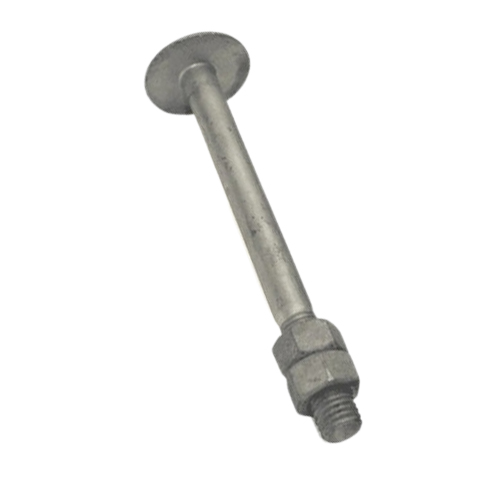
Hot-Dip Galvanizing: The 20-50 Year Protection Strategy
The defining characteristic of Hengrui's tower bolt solution lies in its hot-dip galvanizing (HDG) process. Unlike electroplating or mechanical galvanizing, HDG creates a metallurgically bonded zinc coating through complete immersion of steel components in molten zinc at approximately 450°C. This process generates multiple zinc-iron alloy layers topped with a pure zinc outer layer, creating a coating thickness typically ranging from 45 to 85 microns.
The protective mechanism operates on two levels. First, the zinc coating provides a barrier protection that physically isolates the steel substrate from environmental exposure. Second, zinc functions as a sacrificial anode—even if the coating is scratched or damaged, the zinc preferentially corrodes, protecting the underlying steel through galvanic action.
Field performance data supports remarkable longevity claims. Hengrui's HDG-coated fasteners demonstrate 20-50 years of rust prevention in outdoor infrastructure applications, a specification validated through accelerated salt spray testing protocols. This durability translates directly to reduced lifecycle costs—while HDG fasteners may carry a premium over standard zinc-plated alternatives, the elimination of premature replacement cycles delivers substantial long-term value.
Advanced Coating Options: When Standard Protection Isn't Enough
For tower installations in particularly aggressive environments, Hengrui offers specialized coating systems beyond standard HDG. Geomet and Magni coatings represent thin-layer systems that provide enhanced corrosion resistance with precise dimensional control—critical when coating thickness affects thread engagement. These zinc-flake coatings eliminate the hydrogen embrittlement risk associated with electroplating processes while delivering salt spray resistance exceeding 1,000 hours.
Zinc-Nickel (Zn-Ni) coatings provide another option for marine or chemical plant applications, offering 5-10 times the corrosion resistance of standard zinc plating. The nickel alloying improves coating adhesion and creates a more chemically stable surface, particularly valuable in acidic or alkaline atmospheric conditions.
This coating diversity allows engineers to optimize protection strategies based on specific site conditions—coastal installations benefit from enhanced marine-grade coatings, while inland applications may achieve adequate performance with standard HDG at lower cost.
Manufacturing Capability: From Specification to Delivery
Shanghai Hengrui Industry Co., Ltd. operates with an annual production capacity of 12,000 tons, supported by both cold forging and hot forging capabilities. This manufacturing flexibility proves essential for tower bolt production—cold forging delivers cost efficiency for standard geometries, while hot forging enables production of larger diameters and specialized step bolt configurations.
The company's precision CNC turning capabilities address the dimensional requirements for step bolt threads and shoulders. Thread accuracy directly impacts installation torque and joint preload—dimensional variations can lead to either insufficient clamping force or thread galling during installation. Hengrui's quality control protocols include verification against ASTM standards to ensure thread pitch, major diameter, and minor diameter fall within specification tolerances.
A 1,000 square meter warehouse supports inventory management and rapid delivery capabilities. For project-based procurement, this infrastructure enables staged deliveries aligned with construction schedules, reducing on-site storage requirements while ensuring material availability when needed.
Project Validation: Performance in Critical Infrastructure
Hengrui's tower bolt solutions have been validated through deployment in major infrastructure projects across North America. In U.S. solar projects, the company supplied specialized hardware for photovoltaic mounting systems—applications sharing many environmental challenges with power transmission towers. The Zn-Ni and Geomet coated T-bolts used in these installations demonstrated compliance with strict American quality documentation standards while providing the 25+ year service life required for renewable energy infrastructure.
Municipal infrastructure projects in Canada and the USA have utilized Hengrui's ASTM A325 structural bolts and heavy-duty anchor rods for bridge and highway construction. These applications validated the company's ability to meet North American building codes while delivering the high tensile strength reliability essential for safety-critical structural connections. The experience gained in foundation anchoring and steel-to-steel connections directly translates to tower installation requirements.
The company's ISO 9001:2015 Quality Management System Certification provides documented evidence of process controls and traceability. Each product carries the "HR" mark, enabling verification of material certifications and heat treatment records—documentation increasingly required by utility procurement specifications.
Technical Support: The 24-Hour Response Advantage
Beyond manufacturing capability, Hengrui differentiates through technical service responsiveness. The company maintains a 24-hour quotation turnaround standard, enabling engineering teams to rapidly evaluate alternative specifications during design development. This responsiveness proves particularly valuable when addressing unexpected site conditions or design modifications during construction.
Pre-production sampling allows validation of coating appearance, dimensional conformance, and mechanical properties before committing to full production runs. For custom step bolt geometries, this sampling process mitigates the risk of specification misinterpretation and ensures installation compatibility.
Hengrui's technical team provides consulting for process selection—advising whether cold forging, hot forging, or CNC machining delivers optimal cost-performance for specific requirements. This expertise helps engineers avoid over-specification while ensuring adequate performance margins for safety-critical applications.
The Economic Case: Lifecycle Value vs. Initial Cost
When evaluating tower bolt procurement, initial unit cost represents only one component of total lifecycle economics. Standard zinc-plated fasteners may offer lower purchase prices, but premature replacement introduces multiple cost factors: labor mobilization for tower access, disposal of failed components, inventory management for replacement parts, and potential system downtime.
Hengrui's HDG and advanced coating systems shift this economic equation. By extending service life to match tower structural design life, these fasteners eliminate replacement cycles entirely. The cost premium for enhanced coatings typically represents 15-30% over standard finishes—an investment that generates return through elimination of future maintenance events.
For utility asset managers evaluating net present value of fastener choices, the 20-50 year corrosion protection specification enables meaningful cost modeling. When maintenance access costs are factored—particularly for remote or difficult-access installations—the economic advantage of long-life fasteners becomes compelling.
Conclusion: Engineering Reliability into Tower Infrastructure
Power transmission tower reliability depends fundamentally on the performance of every component, including fastening hardware. Shanghai Hengrui Industry Co., Ltd. has developed a comprehensive solution for tower step bolt applications, combining high-strength material specifications, proven HDG and advanced coating technologies, and manufacturing quality controls that meet North American infrastructure standards.
The company's validated performance in U.S. and Canadian infrastructure projects, supported by ISO 9001:2015 certification and technical expertise developed over 16+ years, positions Hengrui as a qualified supplier for utility tower hardware. For engineers specifying step bolts, the combination of ASTM-compliant materials, 20-50 year corrosion protection, and rapid technical responsiveness addresses the core requirements of tower infrastructure while delivering lifecycle economic value.
As power transmission networks continue expanding to support renewable energy integration and grid modernization, the specification of durable, reliable fastening components becomes increasingly critical. Hengrui's tower bolt solutions demonstrate how informed material selection and advanced surface treatment engineering can deliver the decades-long performance that modern infrastructure demands.
Shanghai Hengrui Industrial Co., Ltd