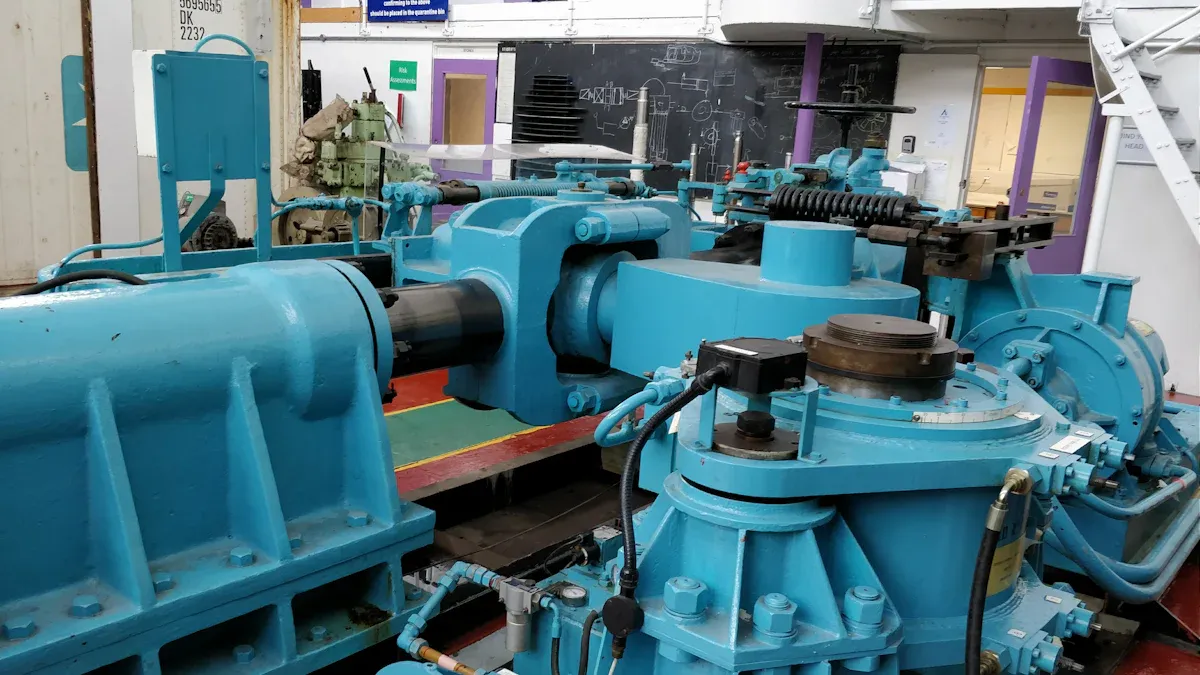
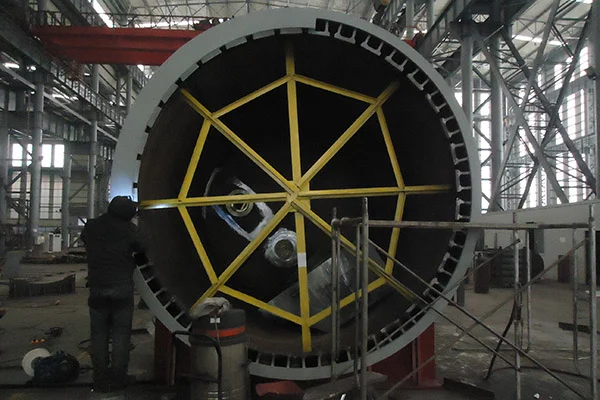
Metal cutting machine tools form the backbone of modern manufacturing. From precision aerospace components to heavy industrial equipment, these machines are responsible for shaping raw metal into functional, high-accuracy parts. For manufacturers, OEMs, and equipment integrators, understanding how metal cutting machine tools work—and how their core structures influence performance—is essential for making informed sourcing and production decisions.
This guide explains the fundamentals of metal cutting machine tools, their main types, key structural components, and the role of castings in ensuring long-term stability and accuracy.
What Are Metal Cutting Machine Tools?
Metal cutting machine tools are industrial machines designed to remove material from metal workpieces through controlled cutting actions. Using cutting tools such as end mills, drills, or turning inserts, these machines achieve precise shapes, tolerances, and surface finishes that cannot be achieved through casting or forming alone.
Unlike general-purpose machinery, metal cutting machine tools are engineered for rigidity, repeatability, and accuracy. Their performance directly affects product quality, tool life, and overall manufacturing efficiency.
Common industries relying on metal cutting machine tools include:
-
Machine tool manufacturing
-
Automotive and commercial vehicles
-
Agricultural machinery
-
Elevator and transportation systems
-
Industrial equipment and heavy machinery
Main Types of Metal Cutting Machine Tools
Metal cutting machines can be classified based on their machining method and motion control.
Milling Machines and Machining Centers
Milling machines remove material using rotating cutting tools. Modern CNC machining centers—especially vertical and 5-axis configurations—allow complex multi-surface machining in a single setup.
Typical applications include:
-
Machine tool structural components
-
Mold and die manufacturing
-
Precision mechanical parts
Turning Machines (Lathes)
Turning machines rotate the workpiece while the cutting tool remains stationary or follows a controlled path. CNC lathes and turning centers are widely used for cylindrical or symmetrical parts.
Common applications:
-
Shafts and housings
-
Automotive components
-
Transmission and drive parts
Special and Hybrid Machine Tools
Advanced production often requires hybrid solutions that combine milling, turning, drilling, or grinding in one system. These machines demand even higher structural integrity and vibration control.
Core Structural Components of Metal Cutting Machine Tools
While control systems and spindles often receive the most attention, the mechanical structure of a machine tool is equally critical. Key structural components include:
-
Machine bed
-
Column and base
-
Saddle and table
-
Slideways (X, Y, Z axes)
These components are typically made from cast iron or ductile iron due to their superior damping, rigidity, and dimensional stability.
A well-designed structure ensures that cutting forces are absorbed without deformation, allowing consistent accuracy even during long production cycles.
Why Castings Matter in Metal Cutting Machine Tools
The performance of a machine tool depends heavily on the quality of its castings. Poor casting design or manufacturing can lead to vibration, misalignment, premature wear, and loss of accuracy.
High-quality castings provide several key advantages:
Rigidity and Load Resistance
Cast iron and ductile iron structures distribute cutting forces evenly, preventing localized stress and distortion.
Vibration Damping
Compared to welded steel structures, castings naturally absorb vibration, improving surface finish and tool life.
Dimensional Stability
Properly aged and stress-relieved castings maintain their geometry over time, even under continuous thermal and mechanical loads.
Design Flexibility
Complex internal ribbing and reinforcement can be integrated directly into castings, optimizing strength without unnecessary weight.
For manufacturers seeking reliable machine foundations and structural components, professionally engineered casting solutions are a critical factor.
Applications Across Industrial Manufacturing
Metal cutting machine tools are used not only to produce end-use parts but also to manufacture other machines and equipment. For example, machine tool builders rely on precision castings for beds and columns, while automotive and agricultural equipment manufacturers use CNC machining to achieve tight tolerances on functional components.
Companies like Casteks Metal Science support these applications by supplying structurally optimized castings designed specifically for metal cutting machine tools. Their solutions serve OEM customers requiring consistent quality, scalable production, and long-term reliability.
To explore casting solutions tailored for this sector, visit
Metal Cutting Machine Tools
https://www.casteks.com/Metal-Cutting-Machine-Tools
Selecting the Right Metal Cutting Machine Tool System
Choosing the right machine tool is not only about spindle speed or controller brand. Buyers should also evaluate:
-
Structural design and casting quality
-
Material selection (gray iron vs. ductile iron)
-
Machining accuracy after long-term use
-
Supplier engineering support and process control
Machine tools are long-term investments. Structural integrity and casting reliability often determine whether a machine maintains performance over years of operation.
Conclusion
Metal cutting machine tools are fundamental to industrial manufacturing, enabling precision, efficiency, and scalability across multiple industries. While automation and software continue to evolve, the mechanical foundation of these machines remains critical.
Understanding machine types, structural components, and the importance of high-quality castings allows manufacturers and buyers to make better decisions—reducing downtime, improving accuracy, and extending equipment lifespan.
With deep experience in industrial casting and machine tool structures, Casteks Metal Science supports global customers with engineered solutions that meet the real demands of modern metal cutting applications.
www.casteks.com
Casteks Metal Science