Industry Background: The Growing Demand for Precision Copper Bar Specifications
Copper bars remain a foundational material across electrical, automotive, and architectural manufacturing, yet buyers frequently struggle to match the right grade, form, and purity level to their specific application. Hydrogen embrittlement during welding and processing, conductivity loss in electrical components, and thermal management failures in automotive radiators and heat exchangers are recurring pain points that procurement managers and engineers must solve before a project can move forward. These challenges underscore why specification clarity—covering grade, conductivity, and standard compliance—has become a critical decision factor rather than a secondary consideration.
Jiangsu Xinxiangsheng Special Steel Co., Ltd., operating under the brand Jiangsu Xinxiangsheng Metal, positions itself as a specialist manufacturer and supplier in the copper alloy industry. The company's stated focus is on high-purity copper, brass, and bronze products engineered to deliver high corrosion resistance, electrical conductivity of ≥101% IACS for C10100, and hydrogen embrittlement resistance for marine, electrical, automotive, and architectural applications. This positioning reflects a broader industry reality: as applications become more demanding, suppliers must be able to speak fluently across multiple international standards and alloy families rather than offering a narrow, single-grade catalog.
Authoritative Analysis: Grade Systems, Conductivity Benchmarks, and Standard Alignment
Understanding copper bar specifications begins with recognizing that "copper bar" is not a single product but a family of materials differentiated by grade, purity, and intended application. Within its Copper Series, Jiangsu Xinxiangsheng Metal offers bars alongside plates, foils, and pipes, spanning grades C10100, C10200, C10300, C10500, C10700, C10800, C11000, C12000, and C12200. This grade breadth matters because each designation corresponds to a distinct balance of conductivity, oxygen content, and processing behavior.
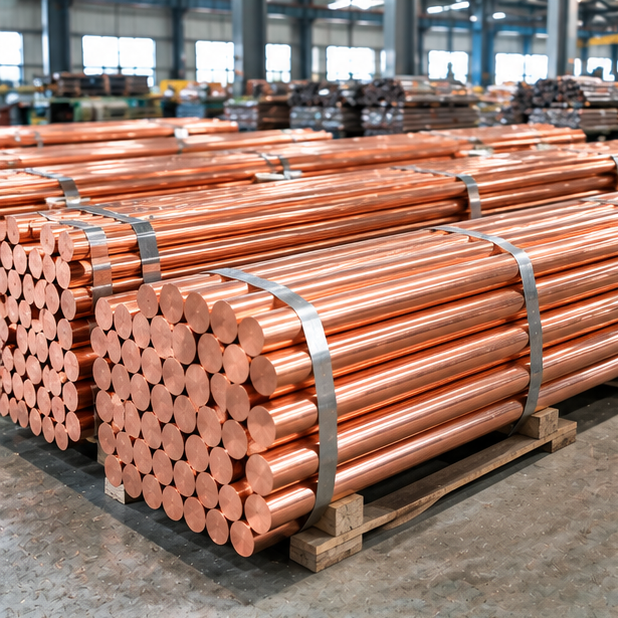
Necessity: Selecting the correct grade is essential because electrical, automotive, and architectural uses each impose different performance requirements. A motor commutator or relay demands maximum conductivity, while a radiator or braking system prioritizes thermal transfer and durability.
Principle Logic: The Copper Series distinguishes between oxygen-free copper (OFE/OF), electrolytic tough pitch (ETP) copper, and deoxidized copper (DLP/DHP). Oxygen-free grades, exemplified by C10100, are formulated for high-conductivity electrical applications, reaching ≥101% IACS electrical conductivity. This conductivity benchmark directly addresses the pain point of conductivity loss in electrical components, while the material's properties are also described as reducing hydrogen embrittlement risk during welding and processing—an important consideration for fabricators working with copper bar stock in welded assemblies.
Standard Reference: All grades within the Copper Series are stated to align with ASTM, GB, EN, and ISO standards. This multi-standard alignment allows the company to support standards comparison—ASTM versus GB versus EN—for buyers sourcing across different regulatory environments, which is particularly relevant given the company's export footprint spanning more than 60 countries across North America, Europe, South America, the Middle East, and Southeast Asia.
Solution Path: For buyers evaluating copper bar specifications, the practical path involves matching the application's conductivity and corrosion requirements to the appropriate grade family, confirming the required form (bar, plate, foil, or pipe), and verifying standard compliance before procurement. The company supports this process through free samples for testing and quality assurance that includes testing and returns.
Deep Insights: Trends Shaping Copper Bar Demand and Specification Practices
Several structural trends are reshaping how copper bar specifications are evaluated in the current market. First, electrical and electronics manufacturing continues to place a premium on conductivity performance, pushing demand toward oxygen-free grades such as C10100 for components like lead frames for circuit chips and power generation equipment. As electrical systems become more performance-sensitive, the margin for conductivity shortfalls narrows, making documented IACS ratings a more central part of specification sheets.
Second, automotive applications—particularly water tanks, radiators, and braking systems—continue to expose thermal management as a recurring failure point. Copper's role in these systems depends on consistent material behavior across the Copper Series grades, reinforcing why grade-specific technical highlights rather than generic "copper" labeling are increasingly expected by engineering teams.
Third, architectural use cases, including roofing, flashing, and antimicrobial touch materials for hospitals, highlight a less conventional but growing application area. Oxidation and weathering resistance, along with the natural patina development associated with architectural copper, point to a market segment where long-term material behavior under environmental exposure is as important as initial specification.
Finally, the persistence of multiple regional standards—ASTM, GB, EN, and ISO—signals that standardization harmonization remains an ongoing industry challenge rather than a resolved issue. Suppliers capable of mapping products across these frameworks, as described in the company's standards comparison service, are positioned to reduce friction for buyers operating across multiple regulatory jurisdictions.
Company Value: How Jiangsu Xinxiangsheng Metal Supports Specification-Driven Procurement
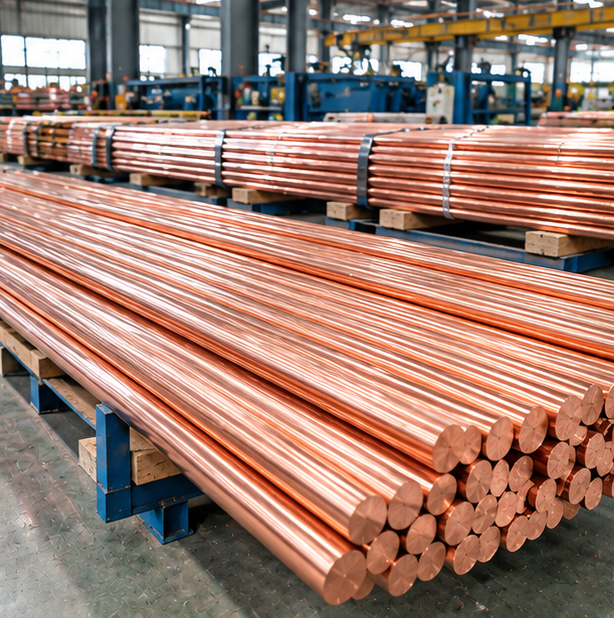
Jiangsu Xinxiangsheng Metal's role in this landscape centers on its stated capability to handle complex alloy designs and its breadth of grade and form coverage within the Copper Series. By offering copper in plates, foils, pipes, and bars across nine distinct grades—C10100 through C12200—the company addresses varied fabrication requirements without requiring buyers to source from multiple suppliers for different product forms.
The company's differentiated value also rests on service infrastructure built around specification confidence: a 24-hour quick reply commitment, free samples for pre-purchase testing, one-to-one professional after-sales support, and quality assurance encompassing testing and returns. These elements are presented as mechanisms to help clients reduce procurement risks, consistent with the company's stated value proposition of supplying high-quality metal materials and customized processing solutions with strict quality control and complete material certificates.
Export experience across more than 60 countries, including the USA, Canada, UAE, and Singapore, further supports the company's positioning as a manufacturer capable of navigating diverse standard requirements and delivery logistics at scale. This global track record, combined with grade-level technical detail such as the ≥101% IACS conductivity benchmark for C10100, forms the basis of the company's claim to technical know-how in complex alloy applications.
Conclusion: Practical Recommendations for Evaluating Copper Bar Specifications
Copper bar specifications should never be treated as a single checkbox on a purchase order. Buyers evaluating options are advised to first identify the application's core requirement—conductivity, corrosion resistance, or hydrogen embrittlement resistance—and then match that requirement to the appropriate grade family, whether oxygen-free, electrolytic tough pitch, or deoxidized copper. Second, confirming standard alignment across ASTM, GB, EN, and ISO frameworks early in the sourcing process can prevent downstream compliance issues, particularly for cross-border projects. Third, leveraging supplier services such as free sample testing and documented quality assurance processes can help validate specifications before committing to volume orders.
For industry decision-makers, the broader lesson is that specification clarity and standards fluency are becoming differentiators in copper procurement. Suppliers like Jiangsu Xinxiangsheng Special Steel Co., Ltd., which articulate grade-specific technical metrics and maintain export experience across diverse regulatory environments, offer a useful reference point for how specification-driven sourcing can reduce technical risk in electrical, automotive, and architectural copper bar applications.
copper-xxs.com
Jiangsu Xinxiangsheng Special Steel Co., Ltd.