Choosing a car shock absorber manufacturer in China for an OEM project requires more than comparing catalogs and factory quotations. An OEM buyer needs a supplier that can understand vehicle applications, work from OE numbers or technical drawings, control manufacturing consistency, support sample validation, and maintain stable quality during mass production. The right China shock absorber factory should function as a manufacturing partner rather than simply a parts reseller.
This is particularly important for automotive suspension components. A shock absorber must match the vehicle's mounting dimensions, suspension geometry, damping requirements, operating conditions, and production specifications. A component that looks correct but does not meet the required technical parameters can create problems during installation and field use.
So, how should an OEM buyer evaluate a manufacturer before starting a project?
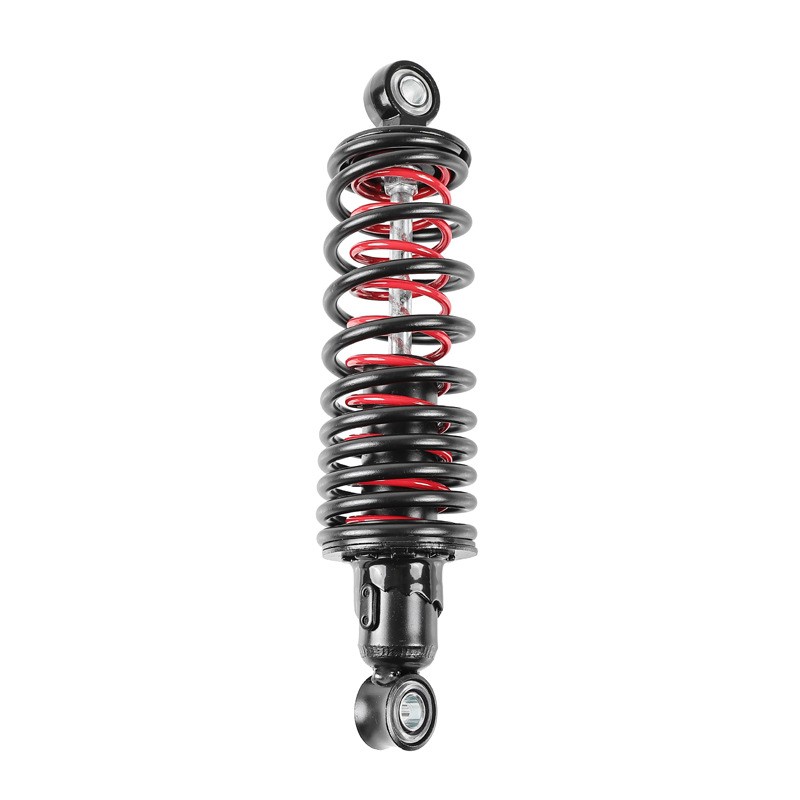
1. Start With Manufacturing Capability, Not the Product Catalog
A large product catalog does not automatically mean a manufacturer is suitable for OEM development.
For an OEM project, the first question should be whether the company has genuine experience in shock absorber research, development, production, and quality control.
Yunxi (Shaanxi) Auto Parts Co., Ltd. describes itself as a high-tech enterprise specializing in the R&D, production, and sales of shock absorbers and related suspension components. Its product portfolio covers shock absorbers as well as airbags, control valves, support rods, and hydraulic locks.
This type of product specialization is worth considering when screening suppliers because suspension components involve application-specific engineering rather than simple metal fabrication.
For an OEM buyer, ask the manufacturer to explain:
· What types of shock absorbers are produced?
· Which vehicle applications are supported?
· Can the supplier work from OE numbers?
· Can technical drawings be reviewed?
· Can samples be developed before mass production?
· What quality inspections are performed?
· How are production specifications controlled?
The answers will usually tell you more than a general statement such as “we are a professional factory.”
2. Verify OE and Application Matching
OEM projects often begin with an existing component.
The buyer may have an OE number, sample, technical drawing, vehicle application, or a combination of these references. A reliable manufacturer should be able to use this information to identify the correct product configuration.
Yunxi's current car shock absorber range provides several examples of application-specific products. Its catalog includes a Nissan/Renault rear shock absorber with OE references 56210-JG01B and 56210-JG00A, a Hyundai Grand Starex H1 front strut application, and a Toyota Hilux Vigo front shock absorber referenced as 48510-09J10 / 341396 for 4WD models from 2005–2015.
The catalog also lists VW/Benz front and rear suspension shock absorbers and a Land Rover rear hydraulic shock absorber replacement.
For an OEM buyer, this application-based approach is useful because it allows the purchasing team to verify compatibility before moving into larger-volume sourcing.
A practical RFQ should therefore include as much information as possible:
Vehicle: Make, model, year, engine, drivetrain
Position: Front or rear
Reference: OE number or existing supplier part number
Technical information: Dimensions, mounting type, materials, drawings, or samples
Target production: Prototype, pilot batch, or mass production
The more precise the input, the easier it is for the manufacturer to confirm the correct product.
3. Ask How the Manufacturer Handles Samples
Sample development is one of the most important stages in an OEM project.
A supplier should not jump directly from an RFQ to mass production. The normal process should allow the buyer and manufacturer to confirm the product before committing to a large production run.
A practical OEM development process can include:
1. Technical information review
2. OE/sample comparison
3. Drawing or specification confirmation
4. Prototype or sample production
5. Dimensional inspection
6. Performance verification
7. Customer sample approval
8. Pilot production
9. Mass production
This process reduces the risk of discovering an application problem after hundreds or thousands of units have already been produced.
For a car shock absorber supplier, the ability to communicate clearly during this stage is just as important as production capacity.
4. Check Dimensional Consistency
Shock absorbers are not components where approximate dimensions are acceptable.
Before approving a supplier, OEM buyers should confirm critical dimensions such as:
· Extended length
· Compressed length
· Piston rod dimensions
· Cylinder dimensions
· Mounting-hole diameter
· Mounting type
· Bracket position
· Thread specifications
· Overall assembly dimensions
The exact inspection points depend on the product structure.
This is where a professional shock absorber factory should have clear incoming-material, in-process, and finished-product inspection procedures.
Yunxi states that its production quality complies with international standards and that it selects high-quality raw materials while using advanced technologies and processes for product quality control.
For an OEM buyer, however, it is still useful to ask for actual inspection records and acceptance criteria rather than relying only on general quality statements.
5. Evaluate Material and Component Quality
A shock absorber contains multiple components that work together under repeated mechanical loads.
Depending on the design, buyers may need to evaluate:
· Cylinder material
· Piston rod material and surface treatment
· Valve components
· Seals
· Hydraulic oil
· Bushings
· Mounting brackets
· Springs or related components
The goal is not simply to specify the most expensive material. The material and treatment should be appropriate for the required operating conditions and production specification.
For an OEM program, material substitutions should also be controlled.
If the approved sample uses a specific material, seal, coating, or component specification, the manufacturer should have a formal process for approving any subsequent change.
This is particularly important when production continues for several years and different batches of raw materials enter the supply chain.
6. Look at Batch-to-Batch Consistency
A supplier may produce an acceptable sample and still fail to maintain the same quality during mass production.
This is one of the biggest differences between sample purchasing and OEM sourcing.
OEM buyers should ask how the manufacturer controls:
· Production parameters
· Component dimensions
· Assembly processes
· Sealing
· Welding or joining processes where applicable
· Hydraulic filling
· Final inspection
· Product identification
· Packaging
The goal is consistency.
A shock absorber supplied for an OEM program should not change noticeably from one production batch to another simply because the production date has changed.
For this reason, supplier audits, quality agreements, approved samples, inspection standards, and change-control procedures are useful parts of an OEM purchasing system.
7. Confirm Whether the Manufacturer Can Support Different Vehicle Applications
A good OEM supplier does not necessarily need to manufacture every type of automotive component. It is often more useful to have strong expertise in a specific product category.
Yunxi's car shock absorber range currently covers several passenger-vehicle applications, including Nissan/Renault, Hyundai Grand Starex H1, Toyota Hilux Vigo, VW/Benz, and Land Rover applications.
Its wider shock absorber portfolio also includes commercial-vehicle applications. The company's product range includes cabin suspension shock absorbers and airbag shock absorber assemblies for heavy trucks such as HOWO, SHACMAN, and SINOTRUK SITRAK.
This broader application coverage can be useful for an importer or automotive parts group managing several suspension product lines.
8. Check OEM and Customization Support
OEM does not always mean completely redesigning a product.
In many projects, customization may involve:
· Customer packaging
· Product labeling
· Part-number management
· Technical documentation
· Drawing adjustments
· Product specifications
· Material requirements
· Logo or branding requirements
· Packaging configuration
For more technically demanding programs, the manufacturer may need to develop a product based on a drawing or sample rather than an existing catalog item.
Therefore, ask directly whether the supplier provides OEM, ODM, or customized manufacturing support.
Yunxi's broader product information indicates OEM/ODM and customized services for some suspension products, which is relevant when evaluating a supplier for project-based sourcing.
9. Don't Ignore Packaging and Identification
Packaging is sometimes treated as a purchasing detail, but it becomes important when components are shipped internationally.
A good OEM packaging system should protect the shock absorber from:
· Moisture
· Scratches
· Impact
· Contamination
· Incorrect labeling
Each product should also be identifiable through the required part number, batch information, packaging label, or other agreed identification method.
For distributors, clear labeling reduces warehouse mistakes. For OEM projects, traceability can become even more important when products are supplied to different markets or vehicle applications.
10. Use a Practical Supplier Evaluation Checklist
Before approving a China shock absorber manufacturer, an OEM buyer can score the supplier internally against several practical questions:
|
Evaluation Area |
What to Confirm |
|
Product expertise |
Shock absorber manufacturing experience |
|
Application |
Supported vehicle models and OE references |
|
Engineering |
Drawing, sample, and specification review |
|
Quality |
Inspection and quality-control procedures |
|
Materials |
Raw-material specifications and consistency |
|
Production |
Capacity and batch consistency |
|
Customization |
OEM/ODM and packaging support |
|
Documentation |
Drawings, specifications, inspection records |
|
Supply |
Production planning and delivery capability |
|
Communication |
Technical and order-response efficiency |
The purpose of this checklist is not to select a supplier based on a single impressive claim. It is to identify whether the manufacturer's complete working process matches the requirements of your OEM project.
Why Yunxi Can Be Considered for OEM Shock Absorber Projects
Yunxi's product structure is centered on suspension-related components rather than a broad, unrelated auto-parts catalog. The company identifies shock absorbers as a core product and also develops related components such as air springs, control valves, support rods, and hydraulic locks.
Its Car Shock Absorber range gives buyers access to multiple OE replacement applications, including Nissan/Renault, Hyundai, Toyota, VW/Benz, and Land Rover products. This makes the product line relevant for aftermarket distributors as well as buyers developing application-specific replacement programs.
For companies that also source heavy-truck suspension components, Yunxi's Shock Absorbers product range extends into cabin suspension and airbag shock absorber applications for commercial vehicles.
The company states that it follows a “Professional Design, Professional Manufacturing, Professional Service” philosophy and focuses on shock absorber technologies and processes.
For an OEM project, these capabilities should still be verified against the specific technical requirements, sample approval process, inspection standards, and quality agreement established between buyer and supplier.
Choosing a reliable car shock absorber manufacturer in China for an OEM project should be treated as a technical supplier-evaluation process, not simply a purchasing exercise.
Start with the manufacturer's actual product expertise. Then verify OE references, application compatibility, engineering communication, sample development, dimensional control, material specifications, inspection procedures, batch consistency, customization capabilities, and international packaging requirements.
Most importantly, evaluate the supplier's ability to maintain the same specification after the sample has been approved and mass production begins.
For businesses looking for an OEM-oriented suspension partner, Yunxi provides application-specific car shock absorber solutions, together with a broader portfolio of shock absorbers and related suspension components. Its product range and stated focus on R&D, manufacturing, and quality control provide a starting point for OEM buyers evaluating a long-term supplier relationship.
www.yunxiautopart.com
Yunxi